Searching for a bleach alternative? You're wise to reconsider it—bleach harms health, the environment, and septic systems.
While highly effective for whitening clothes, bleach's risks have many seeking safer, natural options that deliver comparable results.
 Contents
 After extensive research and testing numerous recipes, I've found a reliable bleach substitute that truly works. I use it daily in my home and recommend it wholeheartedly—it's simple to prepare too. Here's how:
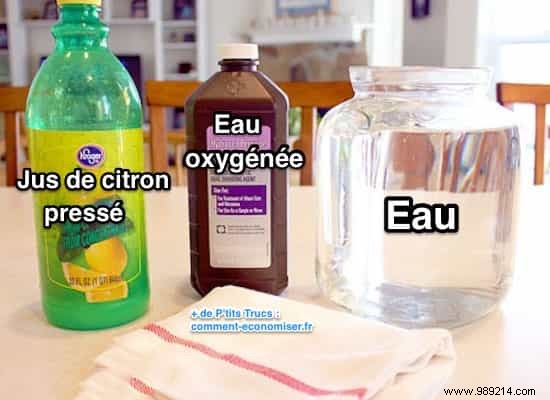
- 3 liters of water
- 6 cl fresh-squeezed lemon juice
- 25 cl hydrogen peroxide
Mix all ingredients thoroughly in a large container.
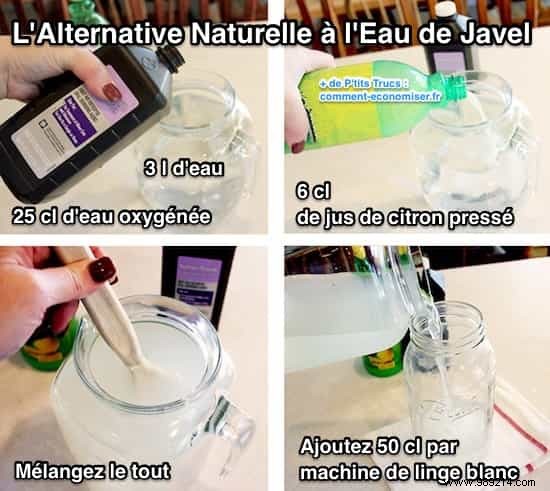
For whitening laundry: Add 50 cl of the mixture to a white load in your washing machine.
For cleaning and disinfecting: Transfer to a spray bottle and use as an all-purpose household cleaner.

To demonstrate its effectiveness, I tested on white decorative pillowcases that had yellowed and accumulated grime from handling and occasional floor contact—despite infrequent cleaning.
These were ideal for evaluation. I added about 50 cl of the mixture directly to the drum (or detergent drawer for front-loaders) with my regular detergent. Post-wash, I let them soak for about 1 hour before spinning.
See the photo above—the transformation is impressive. It exceeded my expectations. I also use it as a multi-surface cleaner in the kitchen and bathroom with excellent outcomes.
For years, I've relied on pure hydrogen peroxide for household cleaning. Pairing it with lemon juice boosts its power and adds a fresh citrus scent.
If you have a septic tank or prefer avoiding bleach for white laundry, give this recipe a try. It's delivered consistent satisfaction in my experience.
Complement this with one of the simplest natural methods: sunlight. UV rays provide powerful, natural disinfection.
Spray whites with lemon juice and dry in direct sun to revive and sanitize. Not always convenient, but incredibly effective—worth trying when possible!
Happy whitening!
Many recipes suggest mixing hydrogen peroxide with white vinegar, but this is risky. It creates peracetic acid, a potent oxidizer used industrially as a biocide.
While it decomposes into safe byproducts (water, oxygen, acetic acid), studies show peracetic acid irritates and burns skin, eyes, and mucous membranes on contact.
Bottom line: Skip vinegar-peroxide mixes for laundry—safety first.
