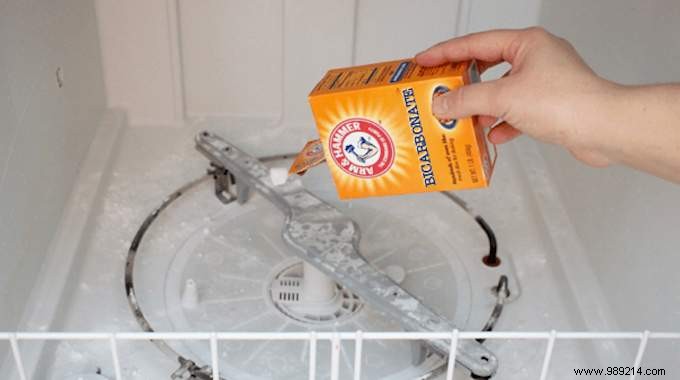
Like many households, my dishwasher accumulates grime and odors quickly. Over time, grease, food particles, and detergent residues build up, forming deposits that reduce cleaning efficiency.
Here's how to degrease and refresh it effectively.
 Contents
 After testing numerous methods, this 3-step process reliably restores your dishwasher to peak performance. It's simple, fast, and uses everyday items.
- White vinegar
- Baking soda
- Dishwashing liquid
- A dish brush
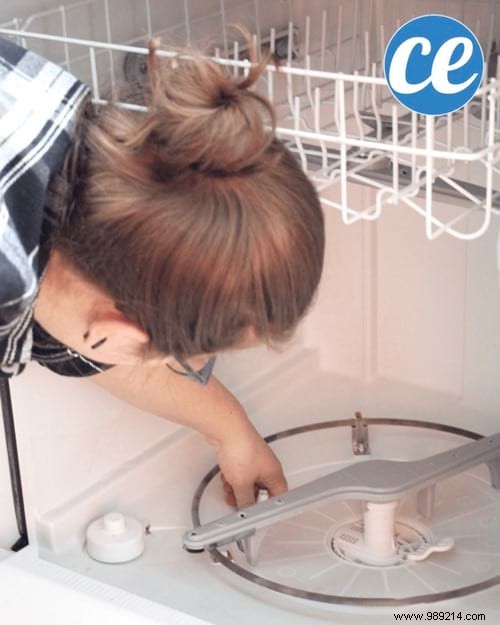
Remove the bottom rack and inspect the dishwasher tub for food debris. You'll often find bones, sludge, glass shards, or gravel in the filters.
This step is crucial, though messy—clogged filters can block drainage, damage the pump, and scratch dishes. If needed, remove the filters and scrub with hot water, a brush, and dishwashing liquid.
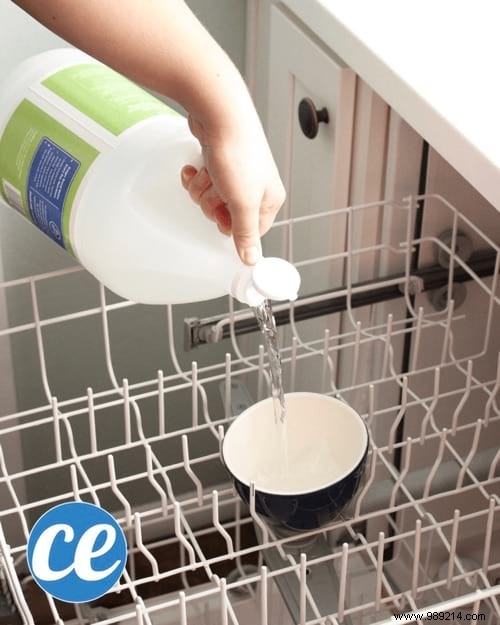
Pour about 25 cl (1 cup) of white vinegar into a bowl and place it on the top rack. Run a quick empty cycle at the highest temperature.
Vinegar's natural degreasing and disinfecting power dissolves grease and eliminates odors. To discover: 20 Secret Uses of White Vinegar For a NICKEL HOME.
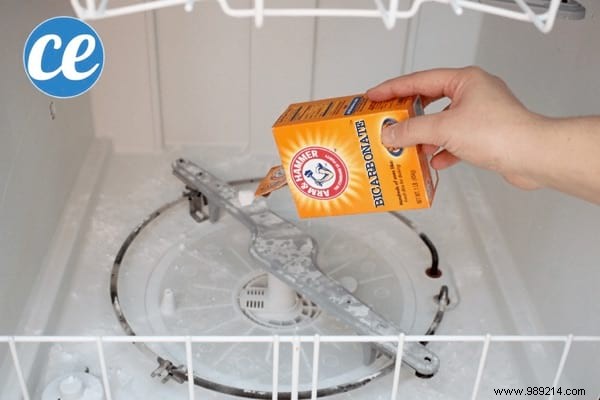
Sprinkle a generous handful of baking soda on the bottom. Run another short, empty cycle at the hottest setting.
Baking soda absorbs odors and sanitizes, removing final dirt traces. To discover: 43 Amazing Uses of Baking Soda.
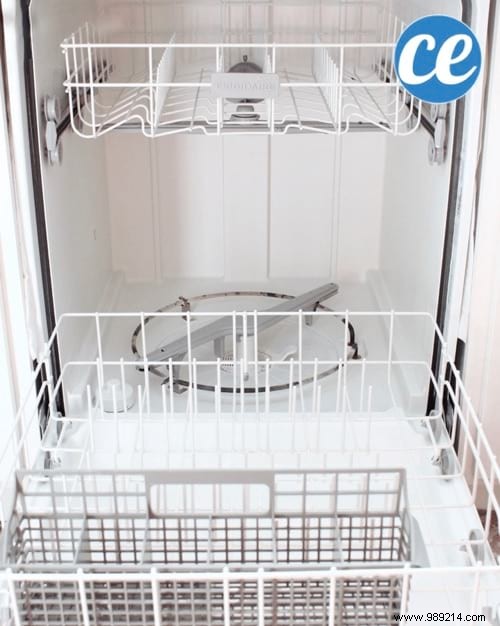
Your dishwasher is now sparkling clean and fresh. This method eliminates odors, standing water, and buildup, improving efficiency and saving on water and energy bills.
Perform this cleaning every 2 months for new or older models to maintain optimal performance.
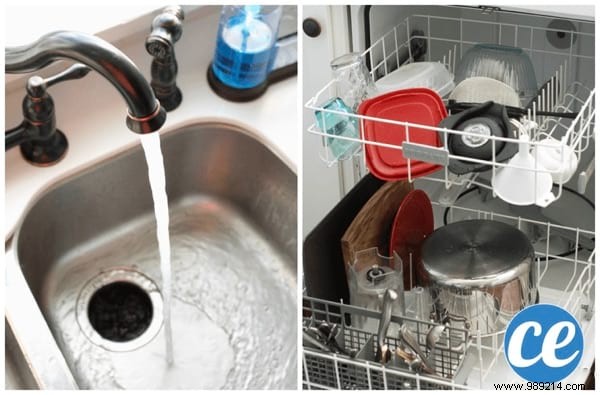
To keep it in top shape:
- Before starting: Run hot water from the sink first for better cleaning.
- Water heater temp: Set to about 50°C for effective cleaning without scalding risk.
- Save resources: Run full loads, but allow space between items for water flow.
- Pre-rinse minimally: Detergents need some residue to activate properly.
- Quick descale: Run empty with white vinegar.
- Garbage disposal: Run it before the dishwasher to avoid clogs.
