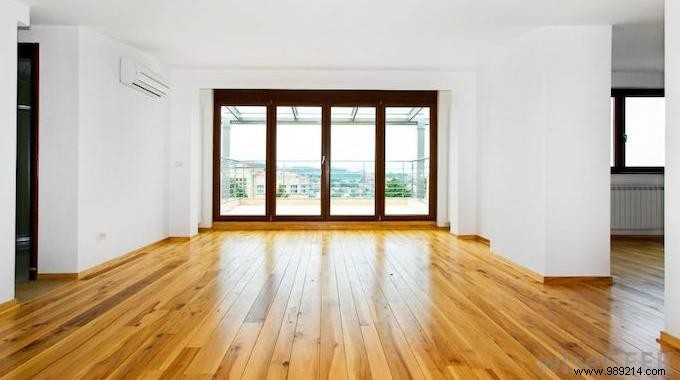
Cleaning your home's floors is essential to maintaining a healthy space. The key challenge? Matching the right method to your specific flooring type.
This holds true for wooden parquet, laminate, linoleum, tiles, or even concrete. Using the wrong cleaner can cause serious damage.
With years of professional cleaning experience, we've refined these chemical-free techniques that deliver pro results safely. See how:

Sweep away dust first using a microfiber broom or an old nylon pantyhose, as shown in our tip here.
Dilute 2 tablespoons of black soap in 5 liters of hot water. Wring out a mop lightly and clean the floor.
No rinsing required. Buff thoroughly dry with a dry cloth attached to a broom handle.
For added sanitizing power, include 5 to 10 drops of lemon essential oil in the mix.
Key Precautions
Avoid pure white vinegar, which can dull and degrade the wood finish over time.
Vacuum or sweep to remove debris. Lightly dampen a mop with water mixed with just 1 drop of dishwashing liquid.
Dry the surface well with a cloth to eliminate excess moisture.
Key Precautions
Never oversaturate the floor—excess water can cause swelling in laminate.
Combine 1 drop of dishwashing liquid and 1 glass of white vinegar in 5 liters of hot water. Mop thoroughly.
For shine and protection, apply a thin layer of pure milk wax with a microfiber cloth. Let dry, and repeat every 2 to 6 months.
Key Precautions
Rinse and wring the mop often to prevent streaks.
Mix 1 liter of hot water with 1 cup of white vinegar. Mop the tiles, then use a dry cloth on the grout lines to absorb moisture.
Key Precautions
Deep clean every 2-3 months. Tackle grout stains with a toothbrush and Meudon white. Skip vinegar on porous stones like marble or travertine.
For garage oil or gasoline stains: Wet the floor, sprinkle baking soda, and scrub with a stiff brush on a broom handle. Rinse with a garden hose.
Key Precautions
For indoor concrete, use a simple water and white vinegar solution.
