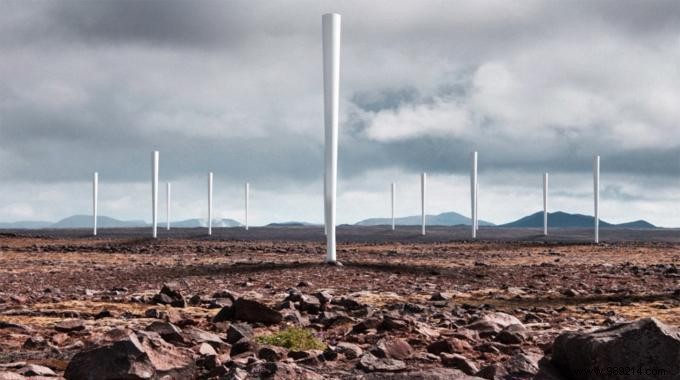
What happens when you eliminate the blades from a wind turbine? You create a more efficient design. This isn't a gimmick—it's the foundation of the Vortex Bladeless turbine prototype.
Standing up to 12 meters tall, this hollow mast resembles a slender straw. Instead of rotating blades, it harnesses wind through vibration, much like guitar strings. 
Founded in 2010 by Spanish engineers at Vortex Bladeless, the design draws inspiration from the Tacoma Narrows Bridge collapse, reimagining destructive aeroelastic flutter as a power source.
As detailed by Wired magazine: "Instead of capturing energy through the circular motion of a propeller, the vortex takes advantage of what's called vorticity (or whirlpool). It's an aerodynamic effect that produces a pattern of spinning vortices."
Traditionally viewed as a structural hazard—responsible for events like the Tacoma Narrows failure—vorticity now generates power. At the mast's base, opposing ring-shaped magnets create a non-electric motor effect, amplifying oscillation. An alternator then converts this kinetic energy into electricity, enhancing storage efficiency.
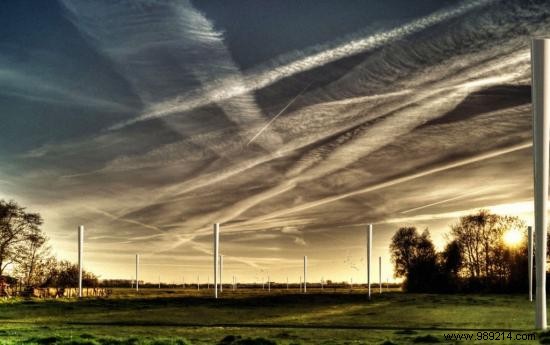
This bladeless design costs 50% less than traditional turbines, operates nearly silently, and requires minimal maintenance with no gears or moving parts.
While individual efficiency is 30% lower, bladeless turbines allow wind farms to double unit density, yielding a net 40% energy gain per area. Resembling an asparagus stalk, this innovation promises more accessible renewable energy.
