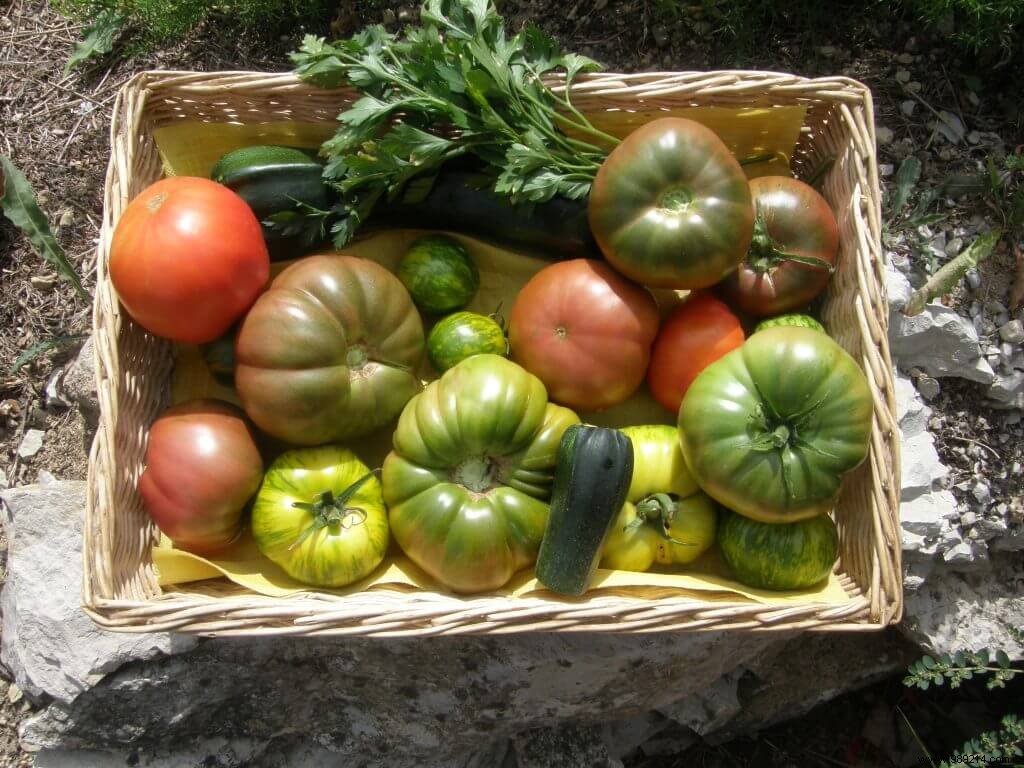
Tomatoes are a beloved fruit vegetable and the world's most popular garden crop. Available in diverse shapes (round, elongated, pear-shaped, flattened) and vibrant colors (red, pink, yellow, green, brown, orange, white, marbled), they range from a few grams to over one kilogram. Flavor varies by variety, fertilization, and watering practices.
Sow seeds in pots or trays in a warm location during February to March.
Transplant seedlings into individual pots once they develop two true leaves.
Plant outdoors after all frost risk has passed, spacing plants 50 cm apart in soil enriched with compost in fall and/or organic tomato fertilizer in spring (minimum soil temperature: 10°C). Space rows 70 cm apart.
If seedlings exceed 15 cm at planting, lay them horizontally in the hole, leaving only the top leaves above ground to promote extensive root development along the buried stem.
Install a stake for each plant to provide support.
Gardeners debate pruning: some prune vigorously, others let plants grow naturally. If pruning:
Remove suckers from leaf axils, retaining only the main stem. Pinch the main stem above the 5th flower cluster.
For two-stem training:
Cut the main stem at 15 cm height. Remove suckers from leaf axils. Pinch both stems above the 4th flower cluster.
Do not prune cherry tomato varieties after flowering.
Tomatoes don't freeze well but shine raw, cooked, or as a base for sauces and dishes. Preserve by canning whole, in sauces, or as puree. Enjoy homegrown tomatoes year-round.