In response to a gardener's question:
“Are nematodes the ultimate solution for eliminating beetle larvae infesting my garden and my neighbor’s?”No single cure-all exists for pest management. From my experience advising gardeners, promising options include the fungus
Beauveria bassiana, used effectively on Reunion Island to infect and kill larvae.
The most reliable nematode for cockchafer larvae is
Heterorhabditis bacteriophora. It penetrates the larva, releasing bacteria that destroy it internally. Key requirements: keep soil moist for 5 weeks and maintain temperatures above 12°C.
A proven, low-maintenance approach is
total soil coverage with 5-7 cm of straw mulch, placed in rows or between crops. This fosters populations of ground-dwelling predators that devour larvae and eggs.
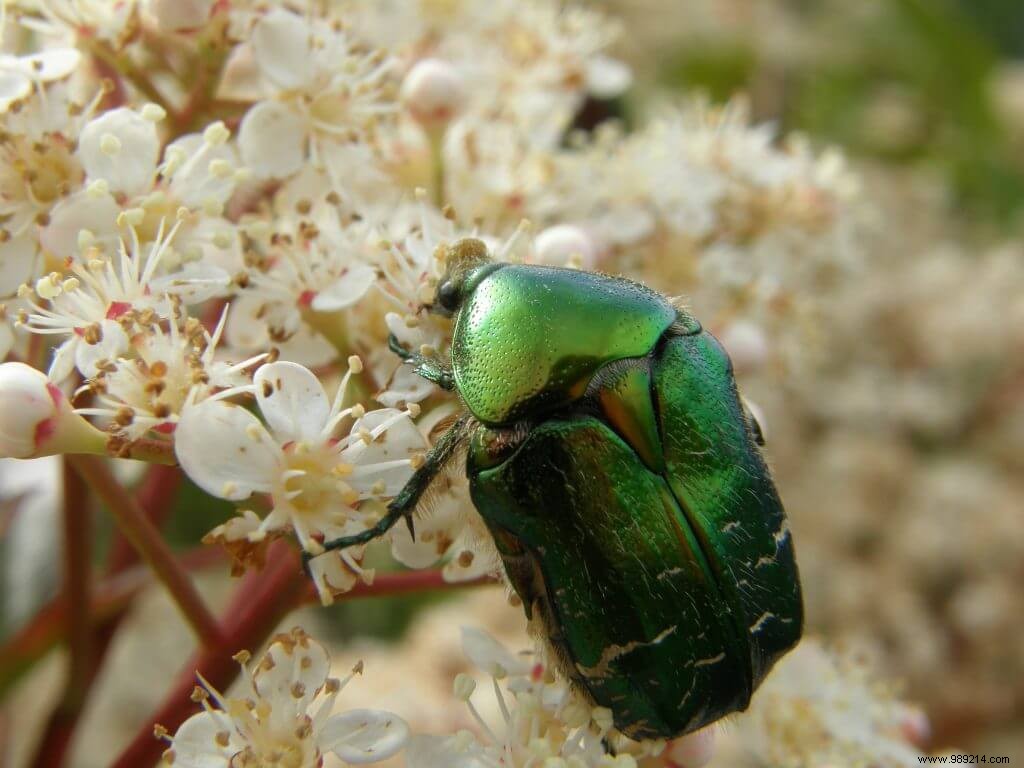
Be aware: similar larvae may belong to other beetles, not reducing their damage but influencing adult control strategies. In southeast regions,
cetonine larvae are common. Combining mulch with hand-picking adults on spring evenings keeps infestations manageable.
Below, a
cetoine (rose chafer):