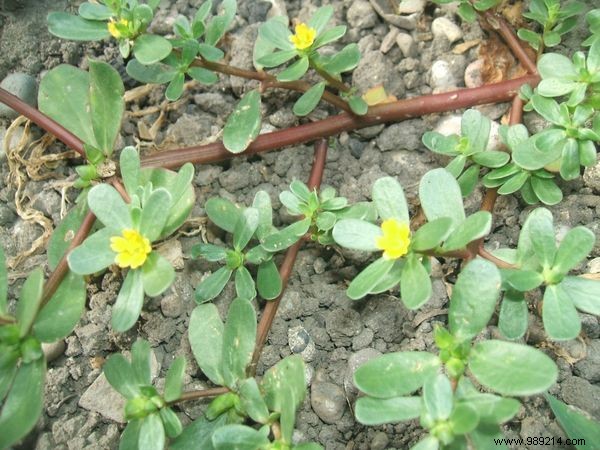
A Gardener's Question: "My vegetable garden is overrun with purslane, and I don't know how to get rid of it!"
As a seasoned horticulturist with years of experience in sustainable gardening, I've seen purslane (Portulaca oleracea) pop up frequently. This annual plant spreads via seeds and thrives in cultivated fields, orchards, gardens, and roadsides—especially in southern France or similar warm microclimates.
Purslane often signals soil issues: low water retention, erosion, leaching, and bare exposure. Seeds can hitch a ride in manure or straw. In your veggie patch, it likely points to sandy or heavy clay soil that's overwatered and compacted.
That said, purslane isn't all bad. As an excellent ground cover, it aerates compacted soil and outcompetes more invasive weeds, protecting your garden naturally.
To keep it in check and prevent takeover:
Bonus: Purslane is a nutritious edible plant. Eat it raw or cooked—it's packed with minerals, vitamins A, B, and C, iron, and offers anti-scorbutic, emollient, and diuretic properties. It even soothes respiratory and digestive irritations.
If it's still a nuisance, harvest and enjoy it in salads or stir-fries! 😊