It's time to start sowing seeds in seed trays. Follow these proven practices from experienced gardeners to prevent damping-off, dry spells, or overwatering—all common pitfalls that can ruin your efforts.
Best Practices for Seed Sowing
- Prepare a seed tray with drainage holes at the bottom to allow excess water to escape. Clean and disinfect it thoroughly—white vinegar works well.
- Add a layer of gravel or clay pebbles at the bottom for improved drainage. Ensure they are washed and disinfected.
- Use a fine seed-starting compost that retains moisture without becoming waterlogged.
- Fill the tray with compost and tamp it down lightly using a flat board—gently, to avoid compacting.
- Place seeds sparingly so they don't touch. Use a toothpick to space them if needed. For lupines, direct sowing in the ground is also effective.
- Lightly cover seeds with a thin layer of seed compost.
- Tamp down gently again and let dry slightly to prevent seeds from sticking.
Finishing Touches and Aftercare
- Label the tray with the variety name and sowing date for accurate tracking.
- Water by placing the tray in a sink to soak via capillary action. Remove when the top half of the surface darkens—monitor closely to avoid over-saturation. Then place in a warm spot.
- Subsequent waterings use a fine mist sprayer from above; keep the compost consistently moist but not soggy.
- Transplant seedlings promptly to prevent legginess, where stems elongate without thickening.
- Monitor for germination, which typically takes a few days.
- If seedlings emerge, congratulations—your technique worked!
- If not, troubleshoot common issues here: Les semis qui ne l’èvent pas.
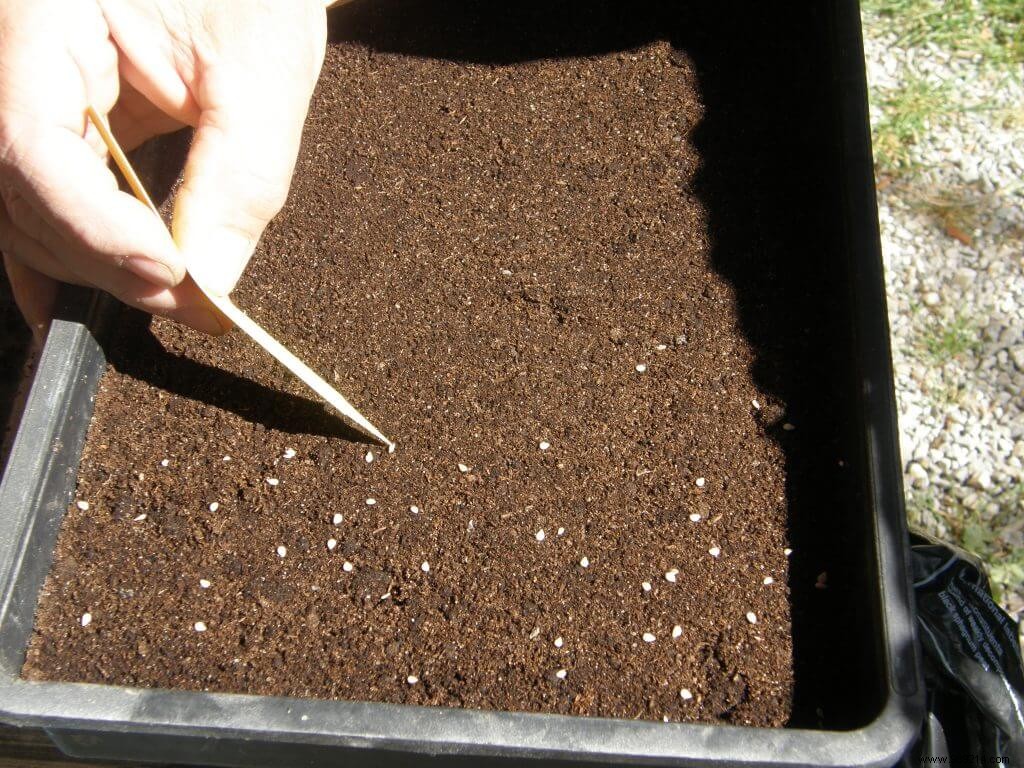
Seed tray ready for sowing
