I've integrated Philips Hue lights throughout my home, but I ditched the official app over a year ago. Despite recent updates with new features and a sleek redesign, it still only controls Hue lights—nothing more.
I refuse to juggle multiple apps for lights, TVs, and sensors. A true smart home should automate everything seamlessly, without manual intervention unless something fails.
Here are 6 battle-tested ways to make your Philips Hue lights far more useful, enhancing or replacing the default app. Reclaim control from your 'smart' devices.
IFTTT (If-This-Then-That) is the simplest upgrade—no extra hardware needed. Sign up for a free account and explore 'recipes' tailored to your needs.
With the IFTTT app, use your phone's GPS for geofencing: auto-turn off lights when leaving home. Start here:

Extend to family members' phones for arrivals at work or home. Geofencing boosts privacy and security by defining GPS boundaries—ideal for staff management too. Read more on geofencing benefits.
IFTTT connects Hue to hundreds of services (skip gimmicks like weather-based colors). Limitations: single-trigger actions only, no conditionals, and up to 5-minute delays—unsuitable for motion sensors. For multi-step automations, try Zapier. Read more on Zapier's multi-step zaps.
Zuli smart plugs use Bluetooth to detect your phone's presence. Plug one in a room, and it senses when you're there, triggering Hue lights. Profiles per user/room supported; integrates with Nest too. iOS-only, $120 for a 3-pack.
Zuli Smartplug: Smart Home Control, Dimmer, Energy Monitor, and Timer (Presence 3 Bundle). Buy Now On Amazon $5.95
For broader needs, invest in a hub.
The Hue Bridge is just a Zigbee-to-network bridge—no real smarts. A true hub centralizes control across devices, enabling automations based on time, presence, and sensors (e.g., lights on if motion and low light detected).
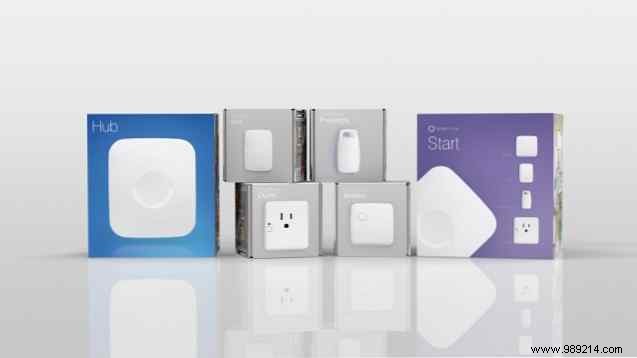
Samsung SmartThings stands out for ease and Z-Wave compatibility. Use arrival sensors for home entry/exit, motion for rooms, Kodi add-ons for media-linked lighting.
Samsung SmartThings F-MON 1 Home Monitoring Kit. Buy Now On Amazon $109.99
Stick to established brands—avoid cloud-dependent or overpromising hubs like Revolv (Google-acquired and bricked). Read more on hub battles.
Can't find the perfect hub? Build your own.
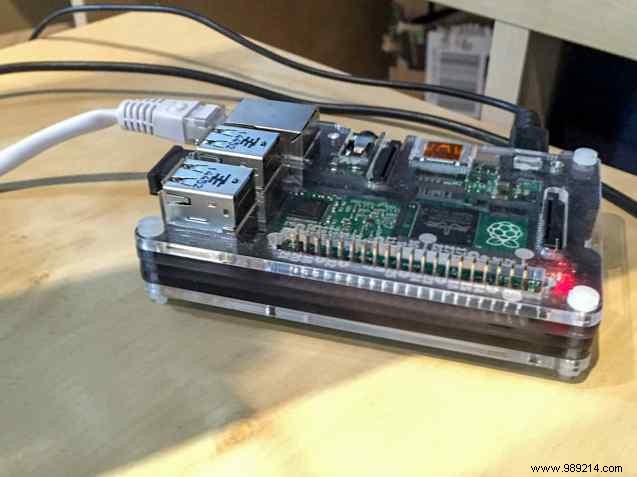
OpenHAB or Home Assistant on a Raspberry Pi offer unmatched compatibility, backed by active communities. My OpenHAB setup integrates:
Complex rules run on a $35 Pi + USB Z-Wave dongle. Expect setup effort—check my guides: Getting Started with OpenHAB and OpenHAB Part 2: Z-Wave, MQTT, Rules.
With a second-gen Hue Bridge (square), enable Siri via app: Settings > Siri Voice Control. Command: 'Turn bedroom light pink' or 'Set bedtime.'
Need Apple TV for remote access; Elgato Eve app for chains. DIY Wi-Fi lights? Read more.
Alexa on Echo: Enable Philips Hue skill (on/off, brightness only). DIY with Jasper on Pi.
Ambilight syncs lights to screen colors—Philips TVs integrate Hue natively (import for US). DIY: HueImmersive (Java), Python for Mac, Minecraft plugin.
From immersive gaming to weather wake-ups, Hue unlocks creativity. What's your top automation? Share below.
