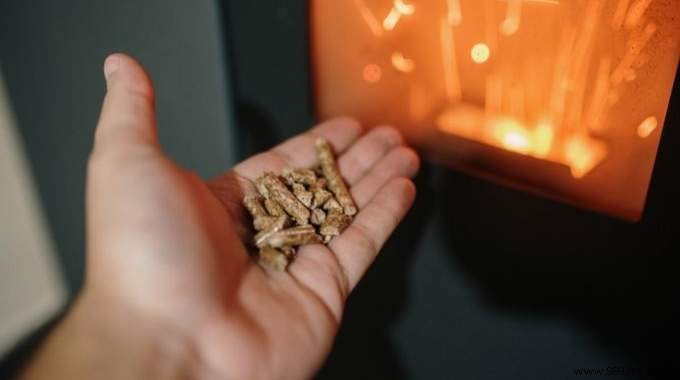
Wood heating is making a strong comeback as a more economical and eco-friendly alternative to gas or oil. Wood pellet boilers represent the latest innovation, delivering a fast return on investment through efficiency and low operating costs.
There are no major differences between a classic gas or oil boiler and a pellet model. The operation remains straightforward.
The key difference lies in the fuel: wood pellets, which cost significantly less than gas or oil equivalents.
Installing a pellet boiler requires modest space for a silo covering about 5 m² to store the pellets.
The compact, fluid-like shape of pellets enables automatic, continuous feeding. Most systems use a worm screw, while others employ suction (slightly pricier but ideal for remote silos). Simply refill the silo periodically.
Pellets generate heat transferred to water or another fluid for your heating circuit. Add a hot water tank to heat your home and supply domestic hot water.
Many modern boilers feature advanced self-cleaning systems. Ash removal can be automatic or manual (monthly if manual).
For instance, the Granulux boiler includes an automatic ash collection container, emptied just 2-3 times yearly. Cleaning occurs every 6 hours without shutting down the unit. Automatic turbulator and burner cleaning further simplifies maintenance—you mainly refill the silo and empty ashes.
Granulux boilers start at €12,200 for the smallest model and €16,200 for the largest.
This upfront cost pays off quickly: pellets cost around €200 per ton versus over €350 for equivalent fuel oil energy.
Replacing an old boiler is straightforward, provided you have a central heating circuit and space for the silo.
Do you have a wood pellet boiler? Share your experience in the comments.
While the initial price exceeds traditional boilers, long-term gains from cheaper pellets outweigh it. Maintenance is minimal, reducing both your effort and technician visits.
Expect up to 50% savings on energy bills.
Local energy info centers can guide you on subsidies from regions, departments, or ANAH. Eligible homeowners may claim a tax credit up to 36% of equipment cost, refunded via tax return regardless of income.
