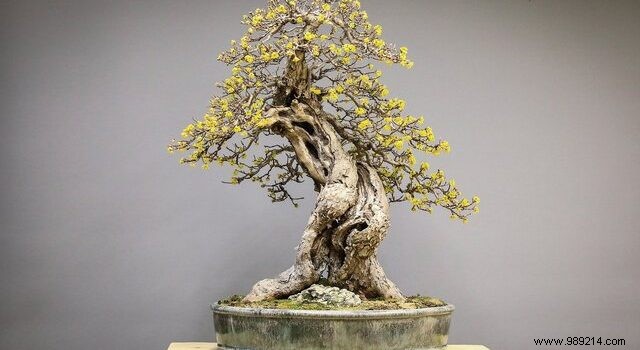
Bonsai, the ancient Japanese art of cultivating miniature trees in pots, blends horticultural expertise with profound aesthetic principles rooted in Japanese culture. Beyond simply nurturing potted plants, starting bonsai offers a gateway to deeper discoveries.
In our increasingly urban lives, with shrinking gardens often reduced to a lawn and a few unkempt shrubs, bonsai brings the essence of a full-sized tree into your home. Importantly, bonsai isn't a dwarf variety—it's any tree or shrub from your local area, shaped through careful techniques to thrive in a pot.
Because they remain compact, you can closely observe their life cycles: buds unfurling in spring, twigs extending with fresh leaves, colors shifting in autumn, and leaves gently falling. Daily care fosters a renewed awareness of nature's rhythms, often overlooked in street trees.
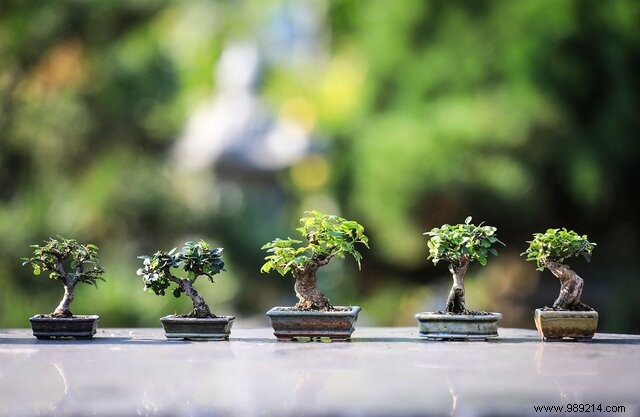
Bonsai heights range from about 10 cm to nearly a meter, but most enthusiasts focus on these practical sizes:
A garden corner, terrace, or even balcony suffices for a thriving collection. Bonsai enthusiasts, or 'bonsaika,' diversify with species like Japanese maples, pines, azaleas, elms, hornbeams, oaks, and beeches.
Unlike natural trees, bonsai evokes nature's ideal beauty rather than mimicking it precisely. A juniper or azalea, naturally bushy, transforms into a elegant single-trunk tree.
This art prioritizes simplicity—a few well-placed branches embody wabi-sabi, the Japanese philosophy celebrating imperfection and transience. Negative space is vital; as the Japanese proverb goes, "a bird must fly through without touching the branches."
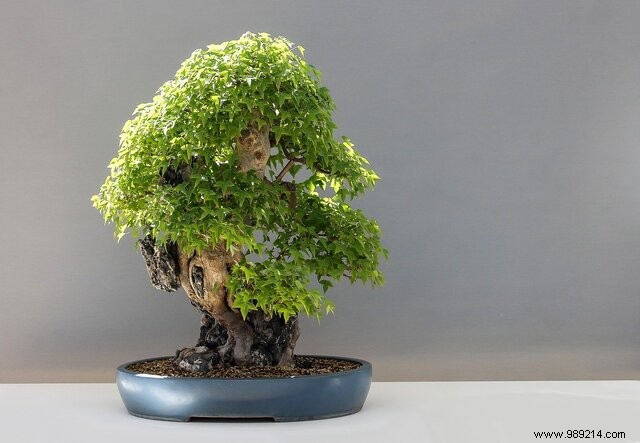
While wiring with aluminum or copper shapes branches, true bonsai artistry respects the tree's vitality. It's not sculpture—it's collaboration with living growth over years, even decades.
Regular maintenance and precise pruning cultivate patience, allowing you to appreciate time's subtle passage and each incremental change.
Garden centers and big-box stores sell affordable imported Asian bonsai, but these often struggle in local climates and are mislabeled as indoor plants due to frost sensitivity.
Instead, seek specialists like the renowned Bonsai Nursery of Jacques Galinou, with over 30 years propagating endemic French species from seeds and cuttings. Locally acclimated trees endure winters and thrive outdoors, avoiding the common fate of supermarket bonsai—yellowing leaves and quick decline.
These are living companions, not disposables. As bonsai master John Naka wisely said, "To make a bonsai, all you need is a pair of scissors and lots and lots of love."
