Spring brings a wealth of garden tips online, and that's a positive development. Whether shared in writing, workshops, or videos, garden advice serves as valuable learning opportunities.
Learning occurs when knowledge increases—from a starting point to a higher level of understanding.
However, information alone isn't training. Simply sharing facts doesn't guarantee assimilation. Learners might retain fragments, but is that sufficient?
Whether teaching rose pruning, cabbage planting, or compost making, the process follows a structured progression.

The tree of knowledge: garden tips
Without a focused goal, guidance lacks direction. Trainers must articulate precise objectives to stay on track.
Example: "Be able to prune a rosebush."
This is too vague. What does proficient pruning mean? For which rose type? Climbing roses require training prunes, while non-remontant varieties need flowering prunes.
Refine objectives so trainers and learners align. Multiple goals per workshop are fine, but avoid mixing them.
With objectives set, proceed through the process.
Use accessible language to ensure understanding. Not everyone grasps terms like "apical flowering of Hydrangea macrophylla." Conversely, oversimplifying for experts can bore them. Test knowledge briefly at the start, using appropriate terminology, and provide basics for those needing it.
A speech pitched too high can alienate beginners.
Gauge levels with simple questions, such as for shrub rose flowering pruning: "Are you aware of different pruning types? Can anyone explain 'going up'?"
These engage the group and acknowledge contributors.
Video tutorials can't assess prior knowledge, often assuming too much or using unfamiliar terms—limiting them to experts.
If your audience varies in expertise?
For mixed groups, start at the beginner level, confirm understanding as you advance, and leverage advanced participants to support others. This builds group cohesion.
Now, explore learning progression.
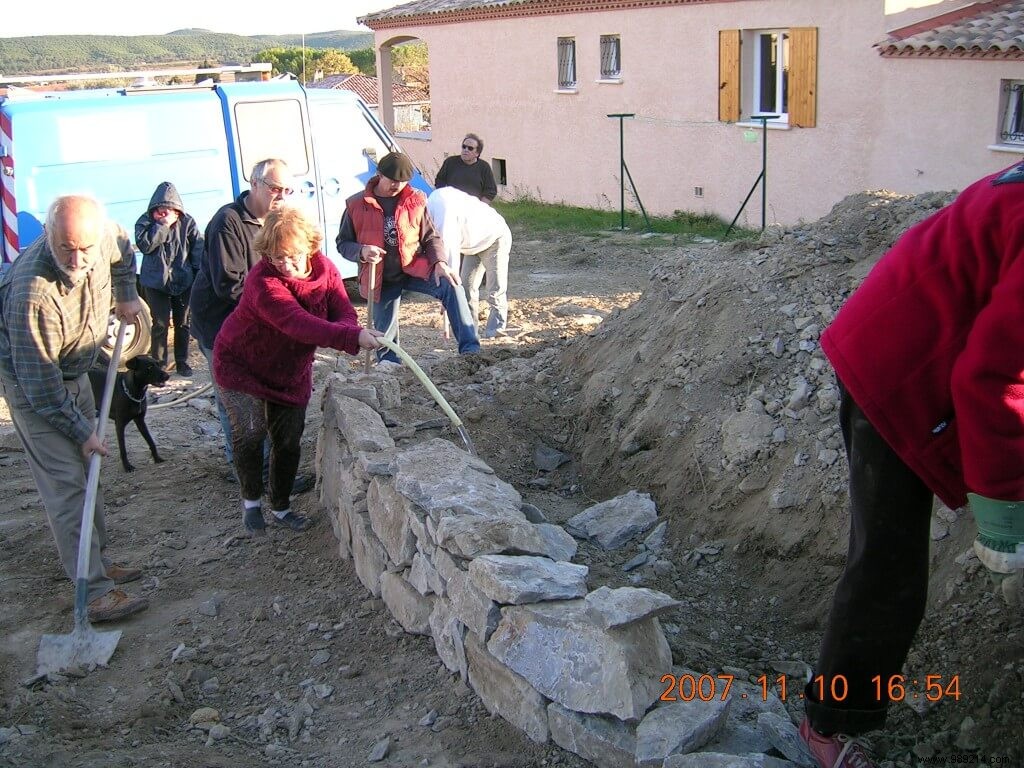
Members of Jardiniers de France at the St. Hippolyte du Fort club, immersed in hands-on learning.
In practical sessions, trial-and-error is key, provided errors are welcomed. Mistakes indicate prior knowledge limits; they're essential for growth. Trainers must emphasize, explain, and embrace them—turning practice into an engaging process: try, succeed, try again, err, seek solutions (with or without help), succeed, and learn.
A successful workshop means the trainer guided progress and learners gained knowledge.
And if everyone leaves satisfied...
Explore the training programs I offer.
