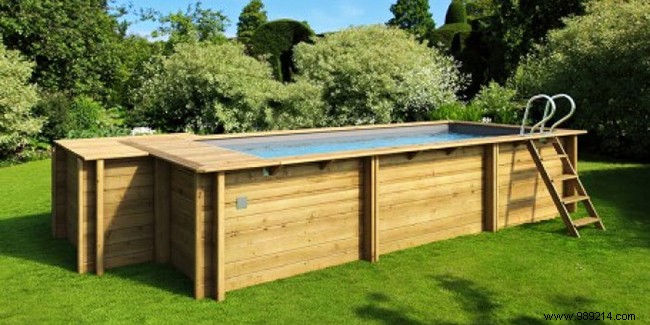
Above-ground pools offer a hassle-free way to enjoy summer cooling and family fun without major excavation. Ideal for most gardens, they require flat ground and adherence to specific regulations. Here's what you need to know as a homeowner drawing from established town planning guidelines.
Unlike in-ground pools, above-ground models sit fully above the surface, making installation simpler and less disruptive—no heavy digging or masonry needed.
They're popular for providing refreshing swims and playtime for kids and grandkids during hot months.
Costs are lower due to minimal labor, allowing quick setup. Options range from rigid and inflatable to freestanding, wooden, or PVC in various shapes—perfect for flat garden spaces.
Private above-ground pools must comply with co-ownership rules and local town planning laws. Constraints are lighter than for in-ground pools, which always need a building permit. However, pools over 100 m2 require one regardless.
Authorizations hinge primarily on how long the pool stays installed.
For seasonal use limited to three months annually, no town hall authorization or prior declaration of works (DP) is needed.
Exception: A DP is required if installed for about 15 days in protected areas, such as heritage sites, near historic monuments, safeguarded urban centers, or classified natural sites.
For longer setups, rules depend on size.
Pools up to 10 m2 need no authorization unless in a protected area.
For 10–100 m2, submit a prior declaration of works (DP) by registered mail, in person at your town hall, or online via the Ministry of Territorial Cohesion website.
Over 100 m2 requires a full building permit, submitted similarly.
If adding a cover, it must not exceed 1.80 meters in height for pools over 10 m2.
Local rules in your municipality's PLU may add restrictions—always check with your town hall first.
Drowning risks in private pools demand vigilance. While above-ground, inflatable, or removable pools are exempt from mandatory safety devices (unlike fixed in-ground ones), experts strongly recommend barriers or alarms to protect children when adults aren't supervising.
