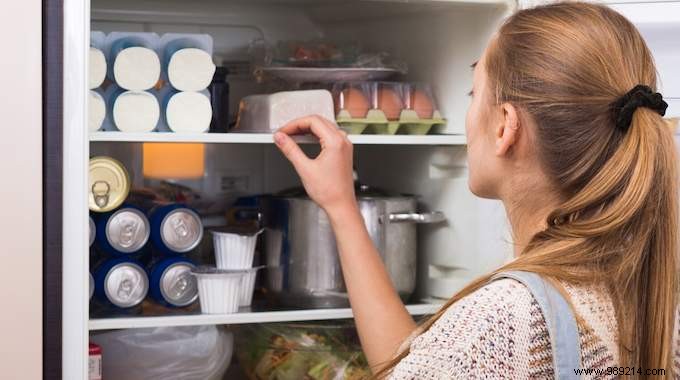
Whether it's half empty or half full, your refrigerator should properly stowed to help you save energy.
A little organization is enough. Here we go!
Very often when we open our refrigerator to put the groceries in, we find that it is not really tidy.
We notice that the tomatoes rub shoulders with the cheese which itself has as its neighbor the unfinished pasta dish from the day before.
Food must be classified in the refrigerator according to the nature of the product and the temperature of the compartment in which it is to be inserted. If like me you have never really paid attention to this, know that there are three types of cold zones:
1. The coldest areas that are at the bottom of the bottom shelf. You can store:raw meat and fish for better preservation.
2. The intermediate zones that are in the center and in the drawers of the refrigerator. It can store:already cooked food, dairy products and eggs.
3. The controlled areas being the fruit and vegetable bins.
Once this sorting is done, your refrigerator will become more efficient and it will consume less energy. Also remember not to overload it to prevent food from touching each other.
Finally, check the expiry dates of the products and place them in the fridge before they are consumed as soon as possible
Is your fridge messy, like mine before I made this little storage, or is it well organized? Leave us a funny comment :-).
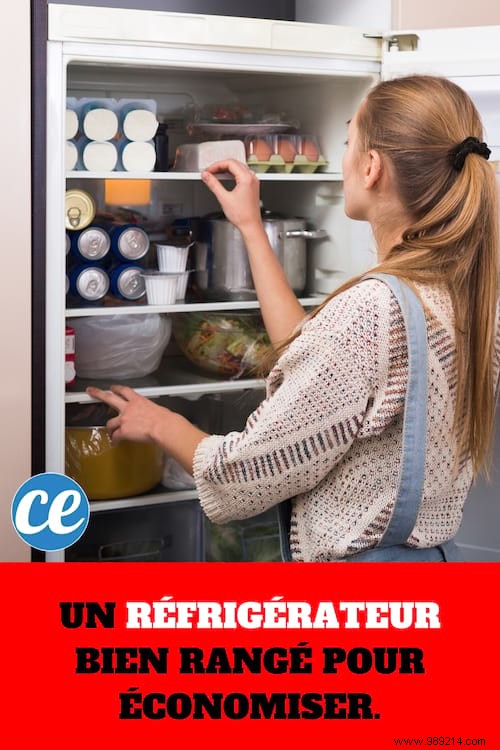
Easy to find what you are looking for in a refrigerator tidy ! The refrigerator door stays open for a shorter time, which reduces electricity consumption. A good smart trick to prevent the refrigerator from heating up and running for nothing. Because each degree lost in the refrigerator is 5% more energy consumed.
By closing the refrigerator door more quickly, I use less electricity and lower my bill. Easy, it's just a matter of habit.
