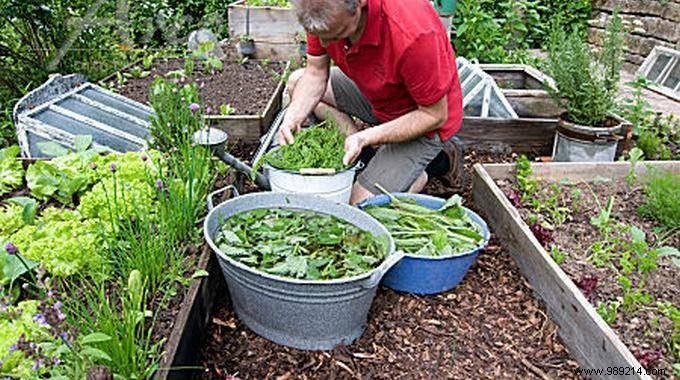
Nettle manure, though not available for sale, remains one of the most trusted organic fertilizers among experienced gardeners.
Rich in potassium, it promotes vigorous plant growth and strengthens natural defenses against diseases.
It's also renowned as a highly effective, low-cost insecticide. Aphids and mildew stand no chance.
Ready to try it? Here's a straightforward recipe to make nettle manure at home that your vegetable garden will thrive on. Watch:
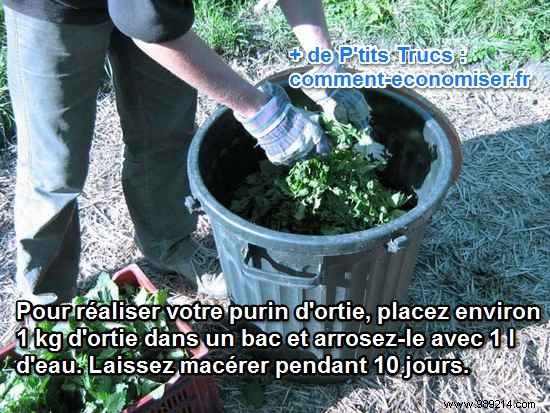
1. Mow fresh nettles.
2. Place about a kilo of nettles in a large canister or barrel.
3. Add a liter of water.
4. Let it macerate for 8 to 15 days.
5. Stir daily to aerate and minimize odors.
6. It's ready when no bubbles rise to the surface.
Your homemade nettle manure is now complete! Store it in a cool, dark place, like a cellar.
Important: Never use nettle manure undiluted. Apply as a spray or by watering.
Pour into a watering can and filter through the rose to strain out leaves—compost the solids.
As a spray: Dilute to 5% (1 part manure to 20 parts water). Ideal for repelling aphids.
For watering: Dilute 1 liter manure in 10 liters water. Use as a natural fertilizer on tomatoes, spinach, cabbage, zucchini, leeks, and pumpkins before fruit set.
Apply every 10-15 days in spring. Avoid excess in summer to prevent leafy overgrowth at the expense of fruit.
Caution: Overuse can harm plants—moderation is key, based on decades of organic gardening best practices.
Other plant-based manures offer targeted benefits: rhubarb, ivy, or fern for pest control against aphids, leek moth, or whitefly; burdock, nasturtium, elderberry, or horsetail to boost plant defenses for prevention.
Have you made nettle manure? Share your tips or other uses in the comments below.
