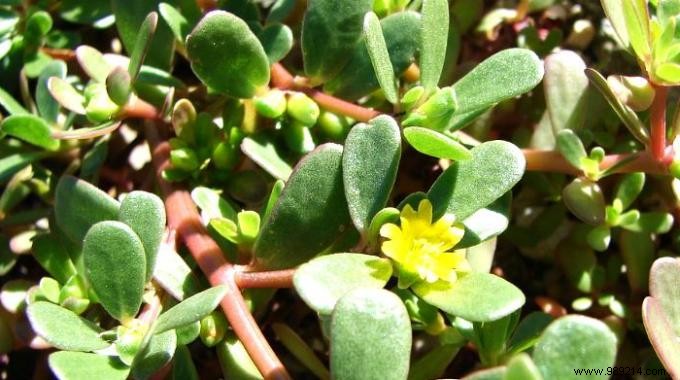
Many gardeners dismiss purslane as a pesky weed.
Yet, as someone who's foraged and cooked with it for years, I can attest it's a delicious and highly nutritious edible plant.
Come summer, it pops up for free nearly everywhere in France.
Don't pass it up!

Purslane (Portulaca oleracea) is a low-growing, invasive plant with sprawling, burgundy-tinted tubular stems.
Its leaves are fleshy, green, and succulent, topped by small yellow or pink flowers.
After blooming, seeds form in green capsules that burst open, scattering them across the soil.
Branches extend up to 50 cm, hugging the ground.
This heat-loving plant thrives in dry conditions, common in French summers—especially near the Mediterranean—in lawns, sidewalks, and urban cracks.
Like dandelion or nasturtium, purslane is entirely edible and stars in the traditional Cretan diet.
Cherished in Persia over 2,000 years ago, it's still cultivated across Africa, Asia, and South America.
Per 100g serving, it delivers roughly:
All for just 19 kcal—making it a low-calorie powerhouse.
With its crisp texture, tangy bite, and refreshing flavor, purslane shines harvested young and eaten soon after. Savor it raw or cooked.
Eat stems and leaves alike, or use leaves to garnish plates.
Raw
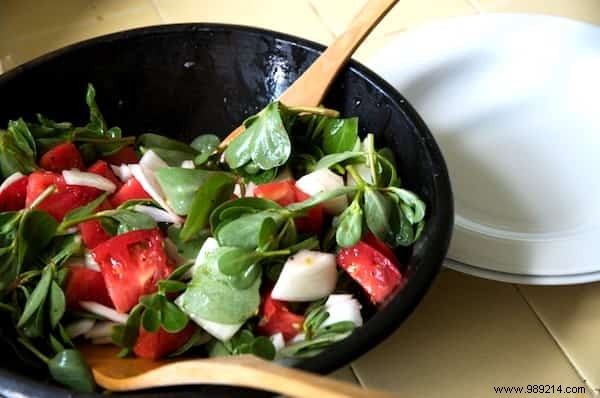
Rich in iron and minerals, pair it with lemon or parsley—natural vitamin C sources that boost absorption.
Wash, dry, chop stems, and dress simply. Personally, I love it with lemon juice and a drizzle of olive oil.
It's perfect in tabbouleh or on toast.
Cooked
Sauté in olive oil, blanch, or stir into omelets and risottos.
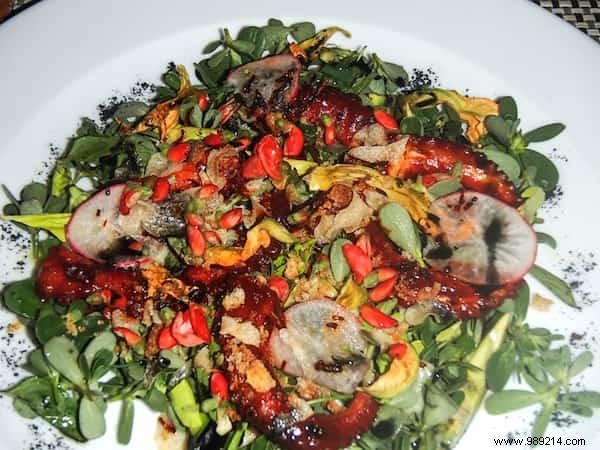
Easy to find and cultivate—as I recently did, transplanting clippings from friends' gardens.
It craves sun, tolerates poor soil and minimal water, thriving even in urban gaps.
Harvest young shoots for tenderness; plants rebound quickly. Seeds sprout fast too.
Just give it 25 cm spacing for its creeping habit.
Do you already forage purslane, or is this your cue to try? Share your recipes and tips in the comments—I'd love to hear them.
