As experienced olive growers know, harsh winters can devastate trees, leaving some unrecoverable while weakening others to attacks from the olive bark beetle, known as Neiroun (Phlaeotribus species). Stress from transplantation can trigger infestations too.
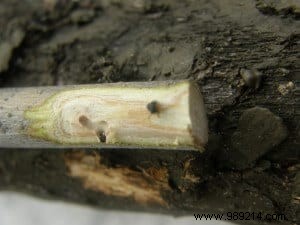
On infested branches and trunks, look for small piles of white sawdust. Peeling back the bark reveals galleries housing tiny black insects. This xylophagous beetle measures 2-3 mm long, with clubbed antennae. Its larvae are small white grubs. Neiroun doesn't kill outright but erodes the tree's defenses, targeting frost-damaged, drought-stressed, or otherwise weakened branches—common after dry winters.
Act swiftly upon detection: Prune affected branches (or trunk) and burn them immediately. Also burn all post-pruning debris, as Neiroun thrives there. Apply nitrogen fertilizer to boost recovery. For drought-stressed trees, provide 50 liters of water per m² twice monthly under the full canopy.
No chemical treatments are approved; rely on pruners, a saw, and fire for control. Share these proven tips with fellow olive gardeners.
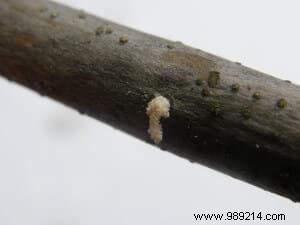
Small pile of sawdust on a weakened branch
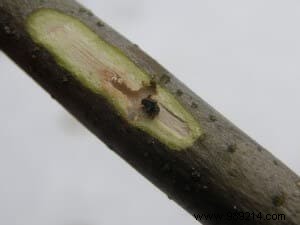
This "charming" black insect and its gallery