The box tree moth (Cydalima perspectalis), an invasive pest from Asia, has no natural predators in Europe—though research into parasitic micro-wasps shows promise.
This moth, with its 3-4 cm brown-and-white wings, poses little threat. It's the larvae—green caterpillars with dark stripes, black pustules, and heads—that devastate boxwoods. Rest assured, they don't sting.
Females lay eggs on the underside of leaves, producing 2-3 generations yearly.
Detect infestations early, before leaves brown and dry. Look for silky filaments resembling cobwebs on shrubs and at the base; the voracious caterpillars are often visible.
For larvae, Bacillus thuringiensis (Bt) sprays are highly effective. Penetrate dense foliage thoroughly. Apply two treatments, 8 days apart; repeat monthly from March to October to target new hatches.
A powerful water jet can dislodge larvae and eggs, though it may stress the plant slightly.
Use pheromone traps to capture males and monitor activity. Infestations ramp up in early spring as overwintering pupae from the last (September) generation emerge.
Enclose boxwoods in anti-insect netting for protection—highly effective, if less aesthetically pleasing.
Prune before treatment to reduce foliage and improve spray access. For evergreens like boxwood, prune in April and August/September (the 'A' months) during active growth for optimal healing.
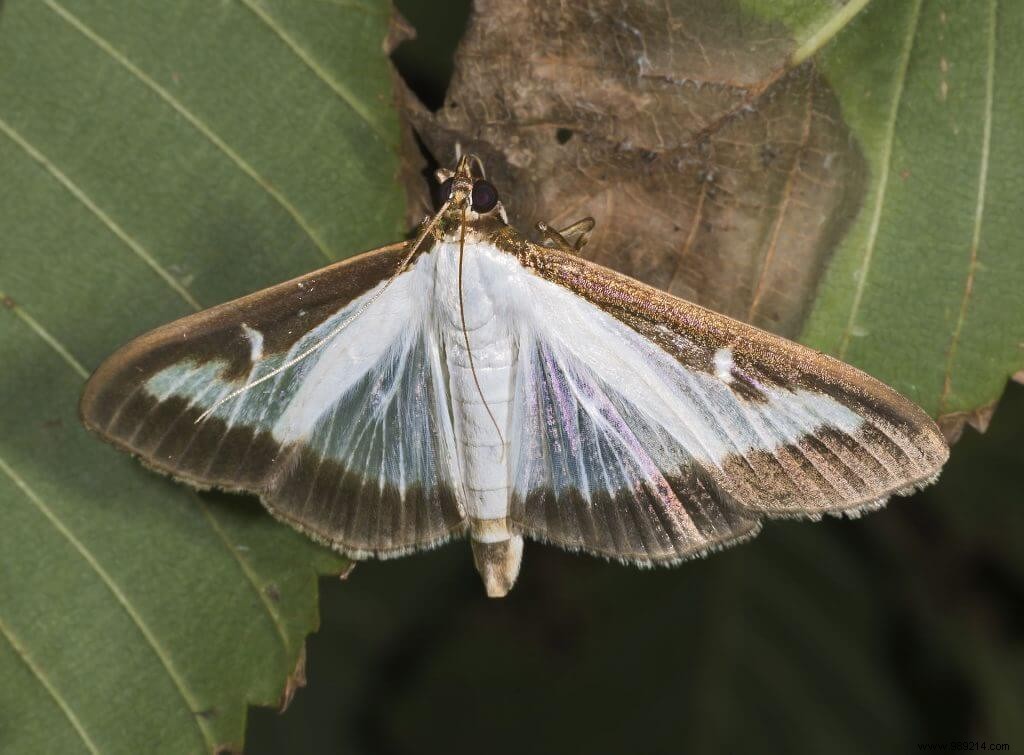
Box tree moth: Photo credit: fr.wikipedia.org/wiki/Pyrale_du_buis
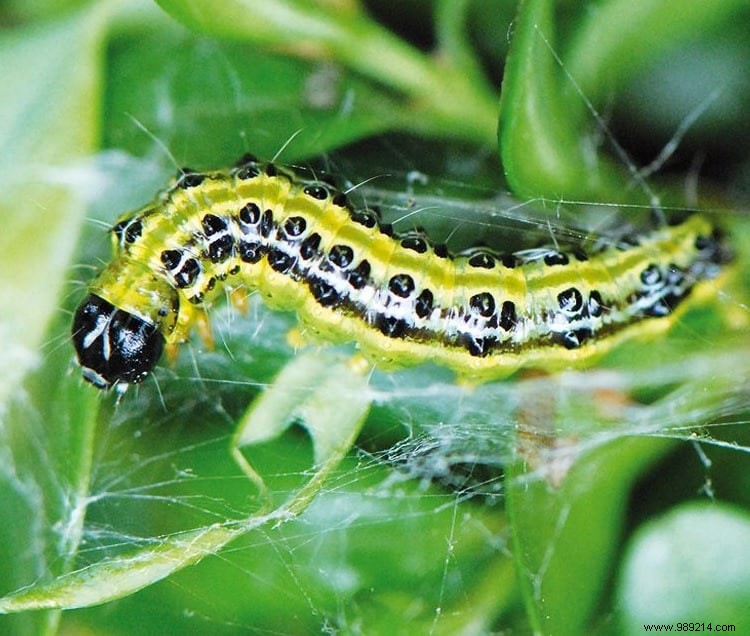
Box tree moth caterpillar: Photo credit: tce-jardins.com
