Reader question: "My lettuce is rotting at the base, covered in white fuzz that looks like rot. What is it, and how can I eliminate it? I'm worried about losing my entire crop."
That white, fuzzy growth accompanied by rot at the collar and lower leaves is typically a fungal infection—most likely Sclerotinia, Botrytis, or Rhizoctonia. Distinguishing them precisely without lab testing can be tricky at first glance, but the outcome is similar: untreated plants often die.
To prevent and manage this, start with cultural practices. Avoid waterlogged soils, as excess moisture fuels these fungi. Plant lettuce at the proper depth—not too deeply buried. Opt for morning waterings that are thorough but infrequent to allow foliage to dry quickly. In organic gardening, fortify plants with nettle and horsetail manure teas applied via watering. Incorporating crop rotations is also essential to break disease cycles.
For chemical treatments, always check the pre-harvest interval (PHI)—it can range from days to weeks, rendering produce unsellable or uneatable. Note that many fungicides are no longer available to home gardeners, though some old stock may linger.
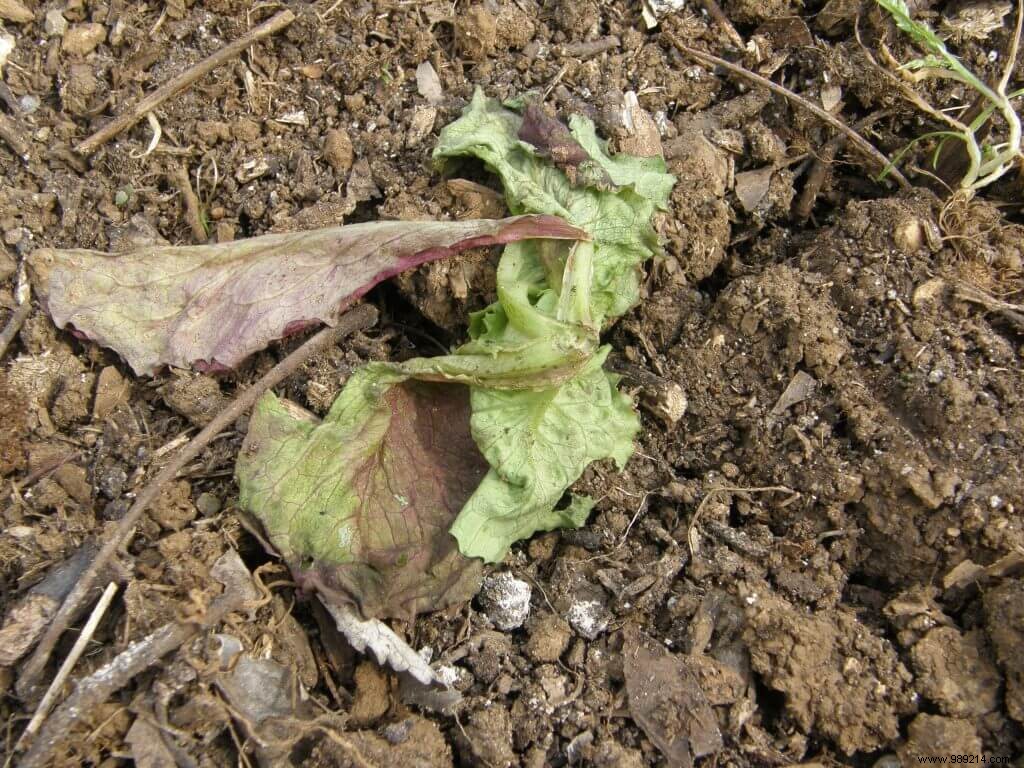
A classic case of base rot in lettuce—uncovering the cause to save the rest.
