Hello, our mulberry tree is about 2.5 meters tall. This year, it extended its branches significantly and produced lots of blackberries. However, the long branches are sagging and cracking at the base under their weight, giving it a weeping willow shape. I’m unsure whether to prune or let nature take its course. It’s also infested with scale insects that we can’t eliminate. This is the first tree we planted with our children, so it holds special importance on our property. Thank you for your help. – Natasha
As an experienced gardener, I’ve seen many mulberry trees thrive with minimal intervention. There are two main approaches: let the tree develop its natural form, respecting that every tree has its unique structure and growth habits, or wait until all leaves have fallen, then selectively cut the branches that bother you most while leaving the rest intact.
Drastically pruning most mulberry trees—chopping thin branches entirely and reducing others to just 50 cm—is common but, in my professional view, a disservice to the tree. I strongly advise against it, as it undermines the plant’s health and beauty. For detailed, photo-illustrated guidance on proper mulberry pruning techniques drawn from years of hands-on experience, check my comprehensive pruning article.
This is my informed recommendation—the natural growth option is best, but the choice is yours.
For scale insects, apply a winter oil treatment using paraffin or rapeseed oil, available at garden centers. Spray thoroughly on all wood surfaces after leaves drop for effective control.
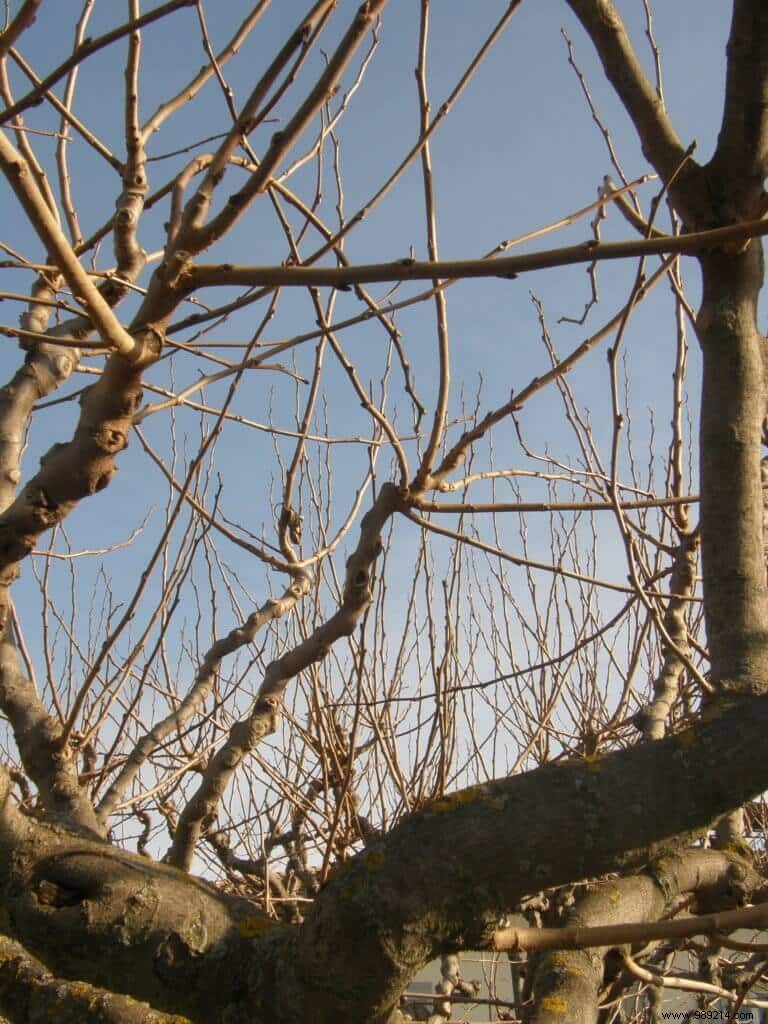
Mulberry tree before pruning
