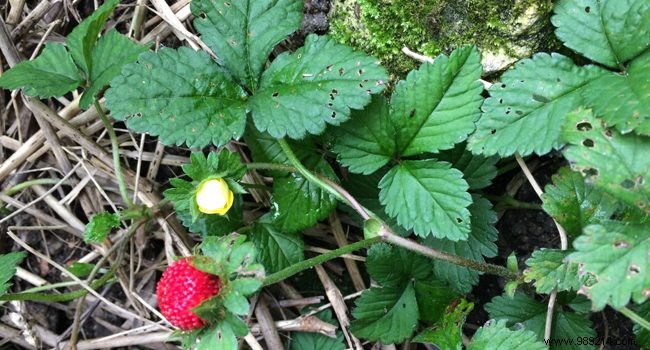
The genus name Duchesnea honors renowned botanist Antoine Nicolas Duchesne, author of The Natural History of the Strawberry published in 1766.
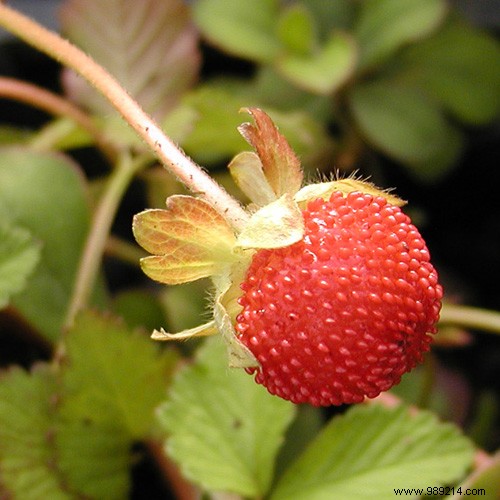
This perennial spreads via runners, making it an excellent ground cover. Its fruits are decorative and edible, though flavorless.
Here's essential knowledge for successfully growing Indian strawberries at home.
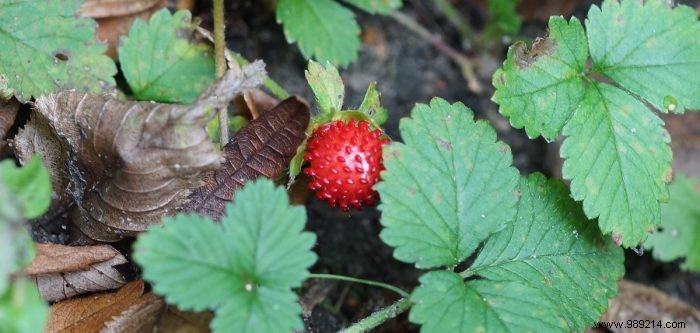
Also known as Duchesnea strawberry, yellow-flowered strawberry, or mock strawberry, Duchesnea indica is a favorite among landscapers for its vibrant flowers and foliage.
Its striking colors and carpeting habit create stunning ground cover. The semi-evergreen foliage reaches up to 1 meter wide and 15 cm tall at maturity.
Duchesnea indica thrives in full sun, partial shade, or full shade, depending on the variety. It's cold-hardy with low water needs.
Plant from March to September, or in autumn through early winter (October-November).
Flowers appear from April to September, yielding attractive red, juicy fruits early in the season.
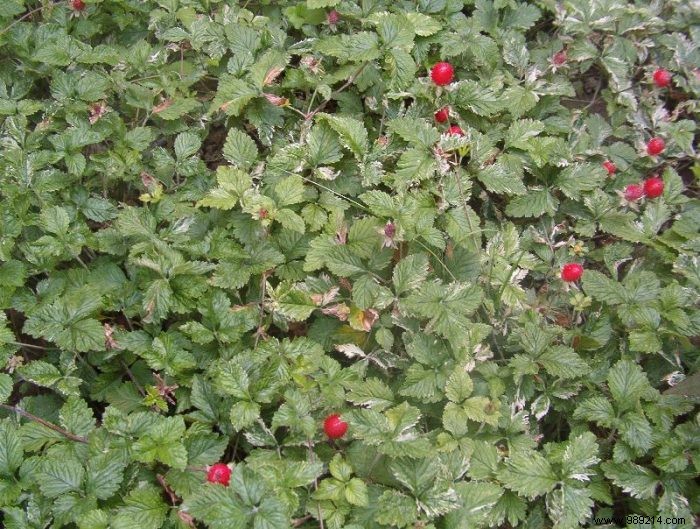
The Duchesnea genus includes six species, but Duchesnea indica and Duchesnea indica 'Harlequin' stand out.
Distinctive yellow flowers feature a calyx with 5-10 parts, five sepals, numerous stamens, and unilocular carpels on a succulent, fleshy receptacle.
Duchesnea indica, native to Asia, grows quickly with ornamental fruits. Found worldwide, including Europe, North and South America, it's invasive in places like Reunion Island, outcompeting wild strawberries.
Duchesnea indica 'Harlequin' boasts variegated foliage with creamy white and red tinges, ideal for brightening semi-shaded spots.
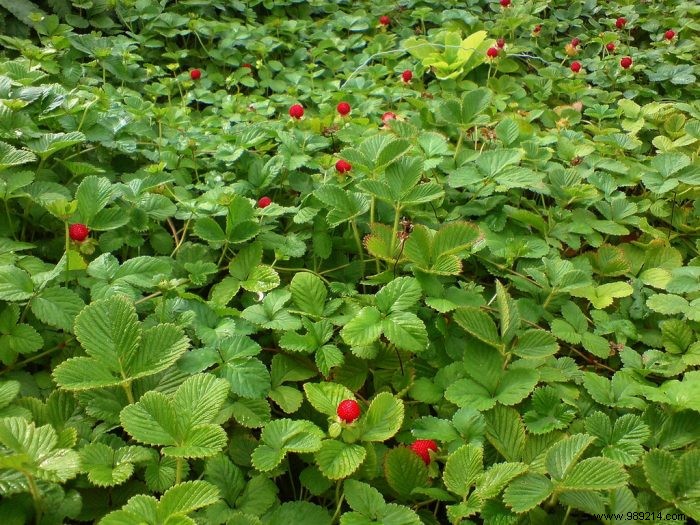
It adapts to most soils but prefers acidic, humus-rich ones. Suitable for woodlands, semi-shade, or full shade.
Plant in spring or autumn for best results.
For instant coverage, use 8-9 plants per m², spaced 30-40 cm apart.
Weed and loosen soil; dig holes twice the root ball size. Amend with potting soil or compost.
Soak plugs in water for 10 minutes before planting. Firm soil around roots and water generously. Top with organic mulch.
It's root-competitive with trees and shrubs. Pair with Aegopodium, Montia sibirica, Vinca, Waldsteinia, cyclamen, or hellebores.
Low-maintenance overall. Water regularly and deeply, especially the first summer after planting.
In pots, keep soil cool during growth.
Reduce watering in late fall. Fertilize monthly from April to September for prolific blooms.
Remove dry or damaged leaves occasionally.
