
Regular garden maintenance keeps your property looking its best, and the lawn often steals the show. Prioritizing lawn care is key, and a scarifier is one of the most effective tools for the job. As lawn care experts with years of hands-on experience, we'll break down the practical differences between electric and thermal scarifiers to help you choose wisely.

A scarifier is a vital tool for lawn aeration and cleaning. Lawns often accumulate moss, thatch, and dead roots, which, if left unchecked, form a dense layer that blocks water, nutrients, and air from reaching the soil. This stunts grass growth and invites weeds.
The scarifier's sharp metal blades or knives gently scratch the surface, removing debris, aerating the soil, and promoting healthier turf. For optimal results, scarify in late spring after mowing—your lawn will thrive through the summer.

Electric scarifiers were the original models and remain a top choice for many homeowners. Powered by an electric motor and connected via cable to a power outlet, they feature a handlebar for easy maneuvering and typically 2 or 4 wheels.
Electric models offer precise control for meticulous lawn care. Four-wheel versions handle slopes effortlessly. Renowned for durability and longevity, they complete jobs quickly with minimal physical effort, making them ideal for smaller yards.
The cord restricts you to the cable's reach, limiting use to lawns under 500 m². They're also noisy, which might disturb neighbors.
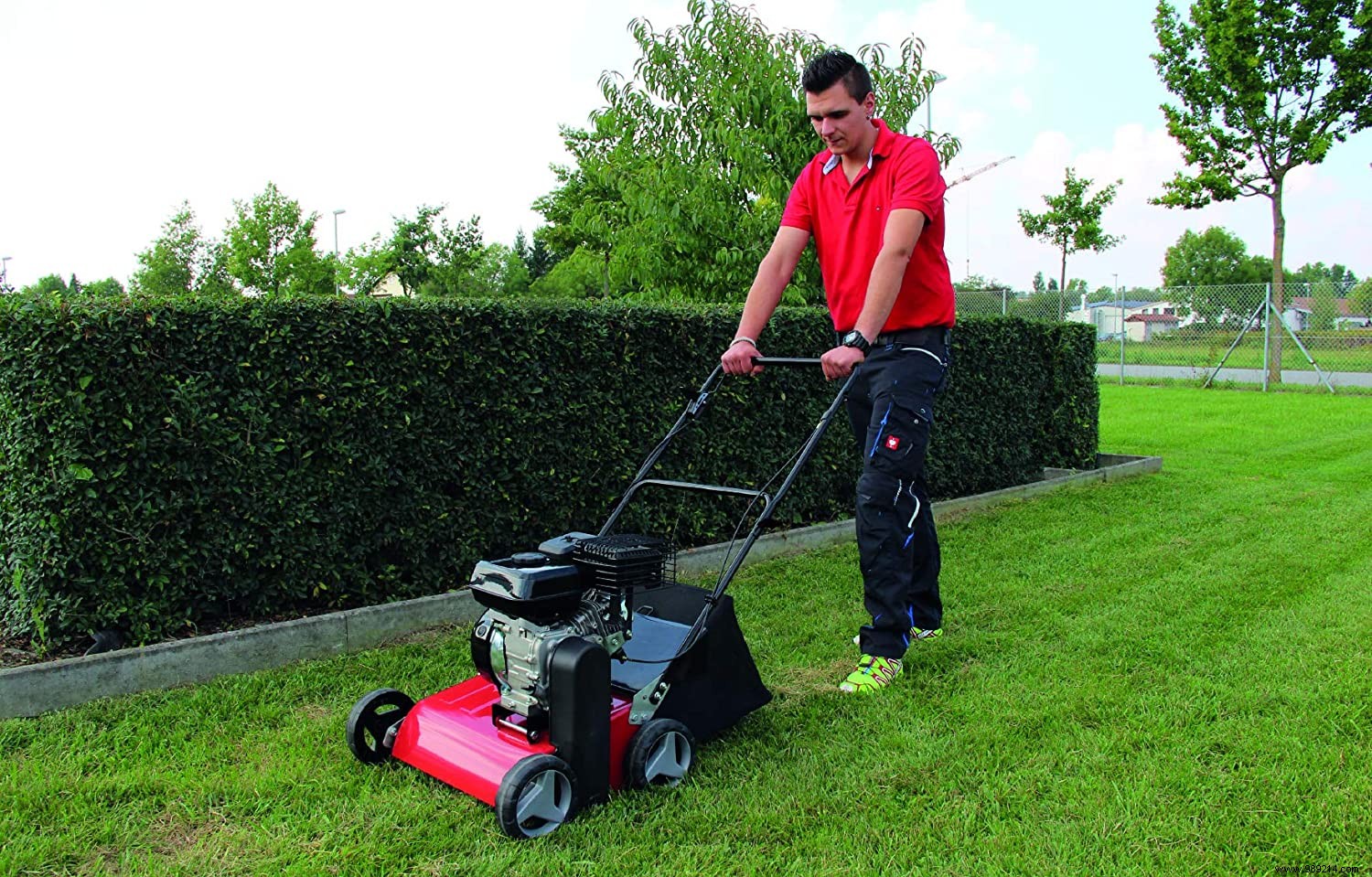
Thermal scarifiers run on gasoline with either 2-stroke or 4-stroke engines, offering complete cordless freedom. They always have four wheels for stability and include a collection tray for debris.
With no cords, they're perfect for large areas without range limits. They're the most powerful and efficient option, tackling any terrain reliably without strain.
The robust engine makes them heavy and tough to transport if issues arise. Maintenance costs are higher, requiring regular oil changes and filter replacements. Like all scarifiers, they're noisy during operation.
