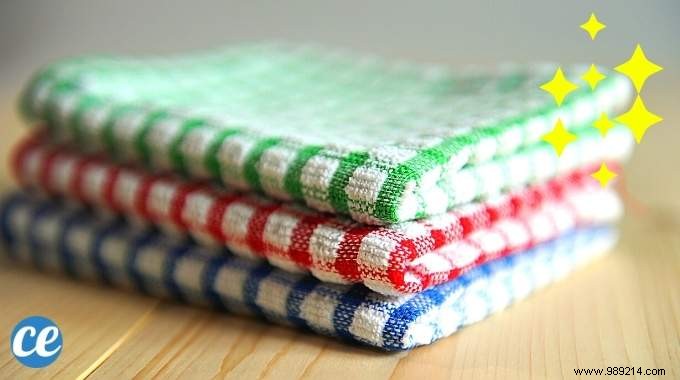
Struggling with greasy, smelly tea towels? As a home cleaning expert with years of testing natural methods, I've found two reliable ways to restore them—removing stains, grease, and bacteria effectively.
Daily use on dishes, hands, and surfaces leaves cotton or microfiber tea towels stained from food, drinks, and sauces. Fortunately, these proven techniques sanitize them quickly.
Watch these two effective methods for deep-cleaning greasy tea towels and eliminating germs:
What you need
- Large saucepan
- Water
Fill a large pot with water and bring it to a boil. Add your dirty tea towels and simmer for 15 minutes. Then, wash and dry them as usual.
This high-heat method kills mold, bacteria, and germs, leaving your tea towels fresh and sanitized. It works great on both cotton and microfiber.
What you need
- White vinegar
- Washing machine
Load your soiled tea towels into the washing machine with your regular detergent. Add about 250 ml of white vinegar (adjust for load size).
Run a cycle at 40°C or 60°C for heavily soiled ones. This is ideal for white tea towels, restoring their brightness without yellowing.
Warmed vinegar naturally kills germs, cuts through grease, and deodorizes fabrics effectively.

- For extra-greasy tea towels, the vinegar method excels at dissolving stubborn buildup.
- Dry towels thoroughly after each use to prevent odors.
- Avoid leaving damp cloths balled up or in standing water.
- Rotate daily—keep spares ready for seamless swaps.
- Opt for thinner tea towels; they dry faster, reducing smell risks. Thicker ones are absorbent but retain moisture, so clean them more often.
- Skip fabric softener—it reduces absorbency and isn't food-safe. White vinegar softens naturally; use method #2 for best results.
