Sliding doors offer a smart way to maximize living space by eliminating the swing path of traditional hinged doors. This design optimizes room layouts without major renovations, enhancing traffic flow and accessibility for those with limited mobility.
These doors serve as flexible partitions—for instance, concealing an open kitchen—or as creative openings and wardrobe fronts. Beyond functionality, they elevate interior design with options like glass, wood, PVC, and more, blending seamlessly with any style.
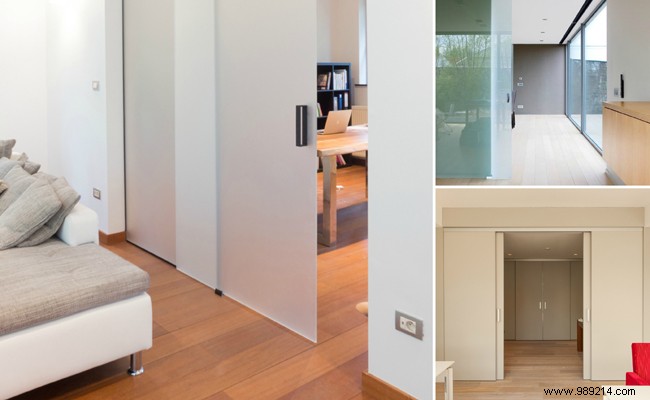
A sliding door features one or two panels mounted within a sturdy metal frame. The frame includes a housing box embedded in the wall and rails that guide smooth operation. Rollers on the door panel glide along these tracks, which can be floor-mounted (the most budget-friendly option) or ceiling-suspended for heavier loads and floor protection.
Ideal for reconfiguring home layouts, interior sliding doors create openings or temporary dividers. They come in two main types:
Overlay sliding doors: The panel glides along the wall, remaining visible when open. Rails are exposed but can be concealed with wood or metal trim. They're cost-effective, easy to install, and customizable in length. However, they require wall space when fully open.
Pocket (or retractable) sliding doors: These vanish completely into the wall for ultimate space savings and seamless flow. Equipped with upper rails, they offer telescopic (dual-track), semi-swing, or curved designs. While pricier and requiring more installation time plus finishes like plasterboard and paint, they deliver unmatched efficiency.
Perfect for wardrobes, these doors minimize footprint with dual top-and-bottom rails spanning the full width. Premium models use wheels for effortless gliding. They adapt to various widths and materials, suiting any decor. The main limitation: partial opening access due to overlapping panels.
Photo credit: Anyway Doors
