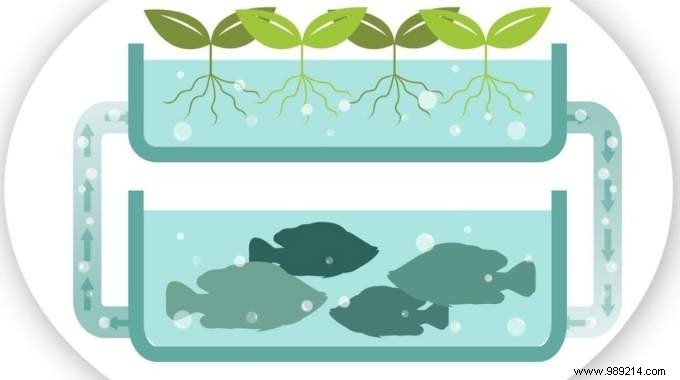
Ever heard of aquaponics? This time-tested system combines fish farming with plant cultivation, creating a self-sustaining ecosystem. Fish waste provides natural nutrients for plants, while plants filter the water, keeping it clean for the fish.
Setting up an aquaponics system at home is a smart way to cut food costs and grow fresh produce without chemical fertilizers or pesticides. It's straightforward to operate—here's the diagram that breaks it down perfectly:
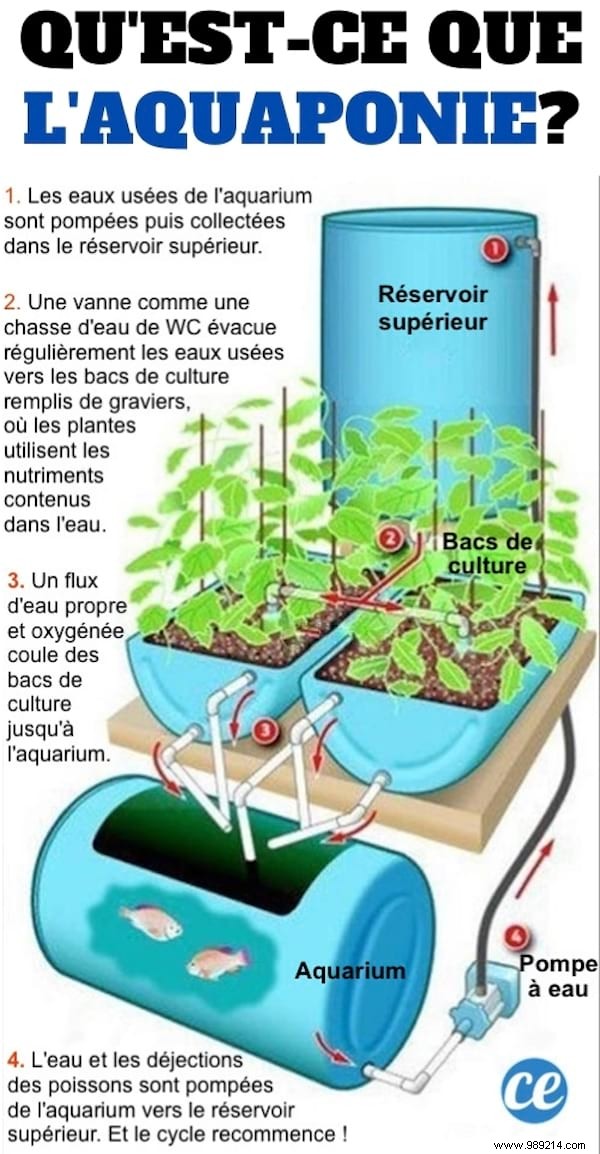
1. Waste water from the fish tank is pumped to a collection tank above.
2. A timer valve, like a toilet flush, periodically releases it into gravel-filled grow beds.
3. Plants in these beds absorb the nutrients from the water.
4. Clean, oxygenated water drains back to the fish tank.
5. The cycle repeats as water and waste are pumped upward again.
The cycle restarts seamlessly! The fish and plant tanks are interconnected in a closed-loop system where water recirculates and purifies itself naturally.
Practical, water-efficient, and highly effective—this ingenious method merges aquaculture and hydroponics. Rooted in ancient practices from China and Latin America, it's now thriving in Canada, Japan, Australia, and the USA, with growing adoption in France.
Aquaponics offers proven benefits backed by years of real-world application:
- Space-efficient: Ideal for small areas, indoors, greenhouses, or even apartments—perfect for urban farming.
- Water-saving: Plants naturally filter fish waste, eliminating frequent water changes and using up to 90% less water than traditional methods.
- High yields and cost-effective: Fast-growing veggies and fish mean abundant, chemical-free harvests. Produce organic food at home affordably, bypassing pricey store-bought organics.
Leafy greens thrive best and are easiest: lettuce, Swiss chard, leeks, watercress. With experience, tackle fruiting crops like squash, tomatoes, cucumbers, and eggplants.
Freshwater species excel: koi carp, perch, trout, zander, or crayfish.
Ready to start? Consult experts for setup or follow DIY tutorials and books. Our recommended reference guide covers everything you need.
