User Question: Sometimes my perennials flop over. Are they just tired, or struggling to stay upright after blooming so heavily?
Causes and Consequences
Rain and wind frequently topple tall perennials, despite their resilient display of vibrant blooms. They bravely lift their heads time and again, but tangled stakes and sagging strings often mar the beauty of the entire bed. These 'lodging' plants—collapsing after the first downpour—frustrate any gardener aiming for a tidy look. Drawing from years of hands-on experience, I've learned to favor compact varieties amid taller ones. Below is a proven selection of low-growing perennials that hold up reliably in my garden.
My Top Compact Picks
- Aquilegia flabellata (Columbine), 25cm; A. biedermeier, 40cm
- Aster alpinus (Alpine Aster), 30cm
- Autumn Aster: Pinch once or twice before peak bloom to maintain 60cm height
- Chrysanthemum maximum (Summer Daisy) 'Little Silver Princess', 40cm; 'Snow Lady', 30cm
- Coreopsis verticillata 'Zagreb', 30cm—more compact than grandiflora types, with better resistance to powdery mildew and drought
- Delphinium grandiflorum 'Tom Pouce', 30cm; D. nudicaule, 30cm
- Erigeron: Replaces summer asters; cut back after first bloom for a second flush in September, 50cm
- Gaillardia 'Kobold', 30cm
- Geranium: All varieties listed under 40cm. G. pratense, 60cm, stays vigorous post-storm with quick reflowering and tolerates pruning
- Lupinus (Lupine) Russell 'Gallery', 50cm—available in many colors, highly attractive
- Santolina: Tried S. rosmarinifolia and S. neapolitana; shear at bloom start to avoid central flattening
- Solidago (Goldenrod): Dwarf variety ('Laurin'?), 50cm
- Stachys lanata: Prevent bloom to maintain tidy appearance
Handling Taller Varieties
For those craving height, sturdy stakes are essential—install them proactively and secure firmly. With proper timing, you'll succeed.
For full guidance on perennial beds: Creation of a Perennial Border
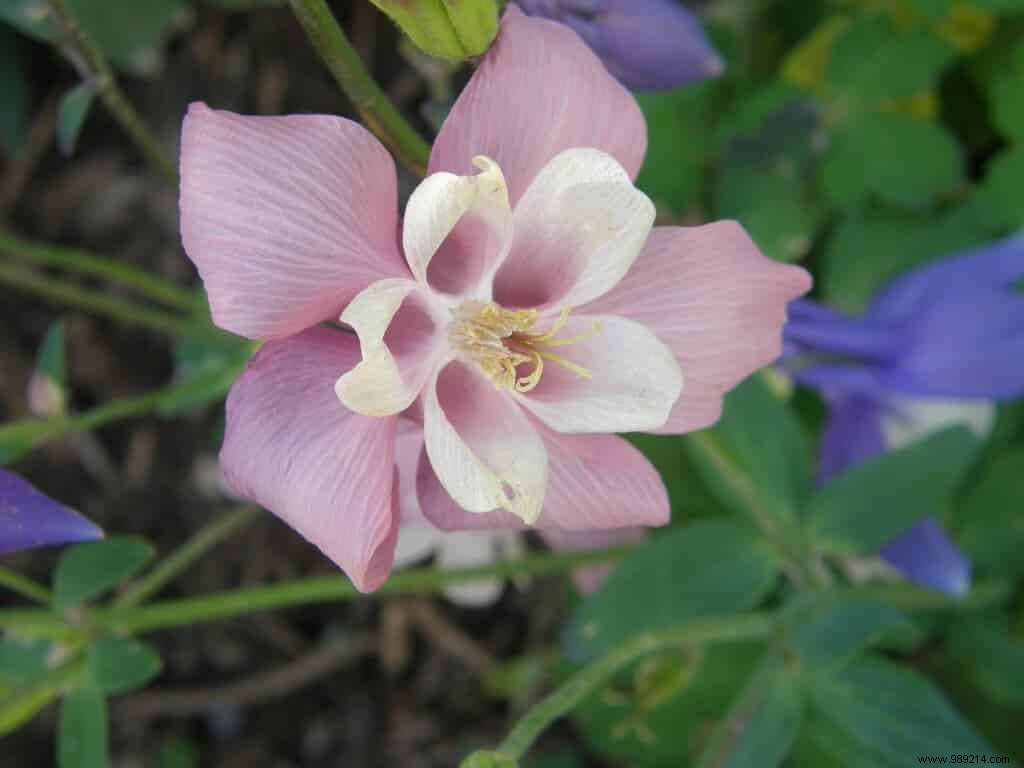
Aquilegia in bloom.
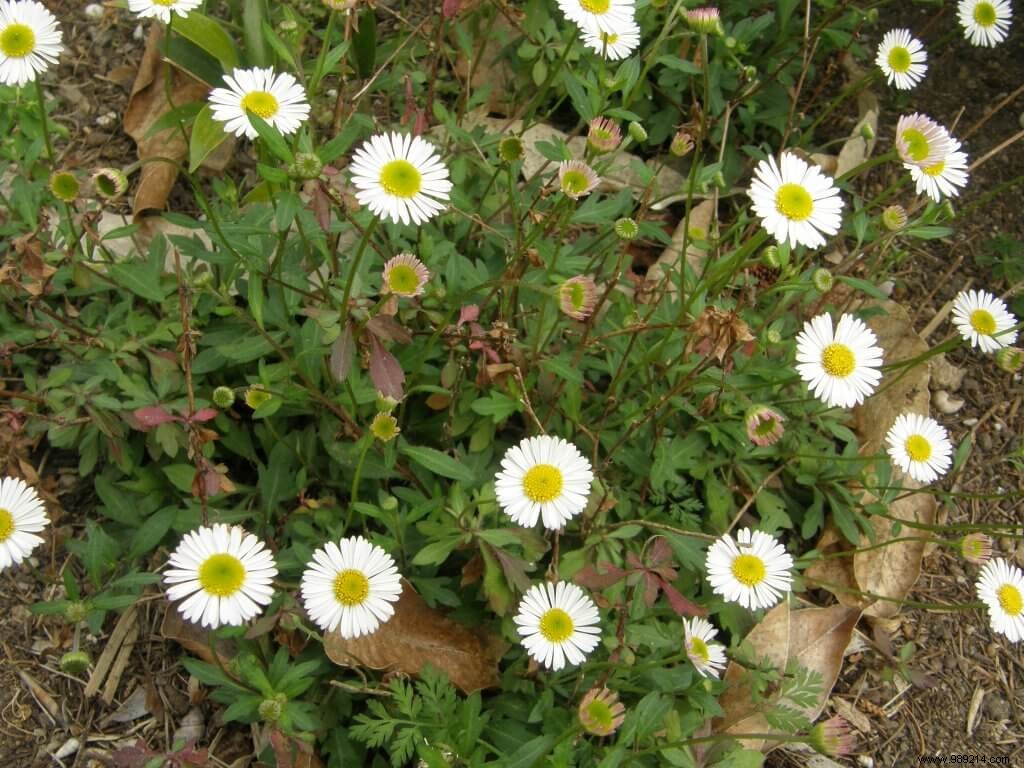
Erigeron karvinskianus: A reliable creeper with no lodging risk.
