Remontant raspberry varieties continue producing until the first frost, reflowering to yield fruit from June through October or November, depending on your region. Non-remontant types offer a single, abundant harvest in June-July. If early frosts are common in your area, opt for non-remontant varieties for reliable yields.
For non-remontant raspberries, summer pruning is straightforward: simply cut back the stems that have fruited. If left unpruned, they dry out and serve no purpose.
Remontant raspberries require a two-stage prune. In late August, remove branches that have fruited on side shoots from last year's stems (the oldest growth). Come winter, cut the remaining young branches in half. These will produce lateral buds for next season's fruiting shoots.
In spring, your raspberry canes reach about 50cm tall with side buds that develop into June-July fruits. New shoots emerge from the ground during this time, bearing late summer and autumn fruits. Distinguishing between these branch types is easy with the plant in front of you.
Unpruned fruited branches dry out and crowd the planting. Regular thinning removes weak or misplaced stems too. Raspberries thrive on organic matter like compost—mulch around the base to retain moisture near their shallow roots. Planting forget-me-nots nearby may help deter raspberry flies, adding a touch of blue while reducing pests.
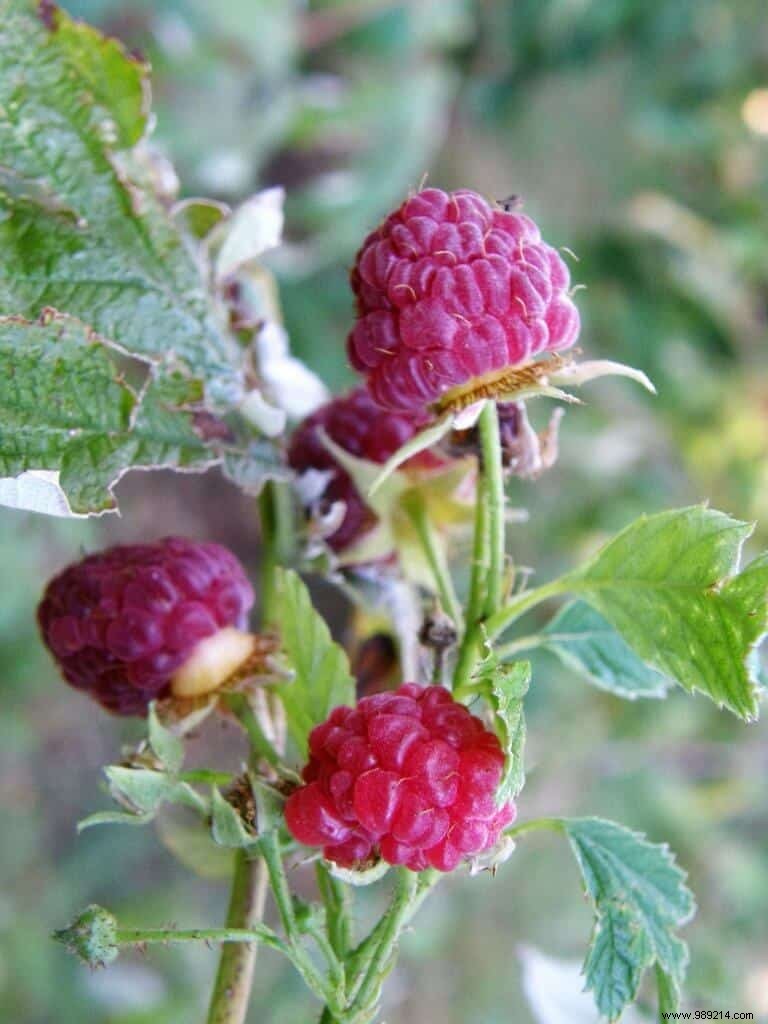
Raspberry plant
