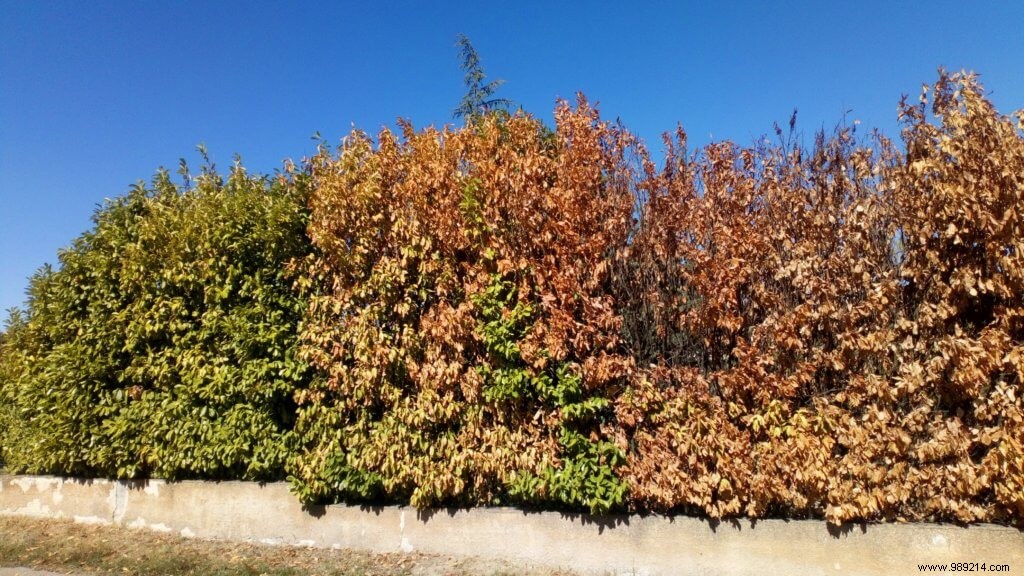
The severe water shortages of 2015, 2016, and 2017—worsened by intense heat and drying winds—have left visible scars on even drought-resistant trees and shrubs. You'll notice scorched foliage on both young plants and mature ones, with dry branches or entire dead plants in challenging spots like well-drained, sloping, or exposed soils.
Compounding the water stress are opportunistic pests that target weakened plants unable to mount natural defenses. Fungi, bark beetles, and other wood-boring insects thrive in these conditions.
It depends on the extent. If only the leaves are dried—even on evergreens—the plant isn't in immediate danger; it's mainly an aesthetic issue. Check the wood by gently scratching the bark on twigs: green tissue means it's still alive. If not, prune back to live wood.
For plants that appear completely desiccated, test the bark at the base. When in doubt, wait until spring. Watch for new shoots and prune dead growth then—avoid hasty cuts.
Species like yews, cherry laurels (known as laurel almonds in the South), and oleanders can recover from severe pruning down to 20 cm from the ground. Skip this for Provence cypresses or pines, as they won't rebound.
To rebuild strength after such stress, apply compost or organic fertilizer sparingly. Over-fertilizing can do more harm by forcing growth on a weakened plant.
Water deeply and consistently. To prevent future episodes, mulch around the base of established trees and shrubs.
Regular health checks are essential—fragile plants invite further issues.
Follow me on Facebook: Mood Gardener
