Planning to wallpaper your home? The options can seem overwhelming, but non-woven wallpaper offers a simple, reliable solution for professional results.
Wallpaper essentially starts as unpainted backing paper—now let's explore non-woven.
A quick primer on non-woven fabric:
Non-woven breaks down to "not woven"—a fitting name.
Definition of non-woven fabric: Made of cellulose and textile fibers or polyester, it has great dimensional stability and is wrinkle-resistant. This makes it particularly suitable for places that are difficult to wallpaper, especially since when its weight is high, it hides the surface irregularities of the wall. In addition, it is hardly flammable. Although permeable to air and water vapor, a layer of vinyl can make it waterproof. The glue can be applied either on the back of the wallpaper – in this case, without impregnation time – or on the wall, resulting in a significant time saving: only two hours are needed to wallpaper a room of 20 m² pasting the wall against more than double pasting the wallpaper. Finally, non-woven wallpaper is easy to dry remove. (Mélanie BAY and Alizée GLASSER)
Non-woven isn't woven; it's compressed fibers bound together—like tissue paper, but far more durable. (We don't recommend tissue for walls, though photos welcome!)
Non-woven revolutionizes installation: Paste the wall directly—no wallpaper table or soaking time needed. It's cleaner, simpler, and faster.
Plus, it hides wall imperfections—thicker varieties create a smooth illusion. The material feels premium to the touch.
Wallpaper originated in China as hand-painted designs.
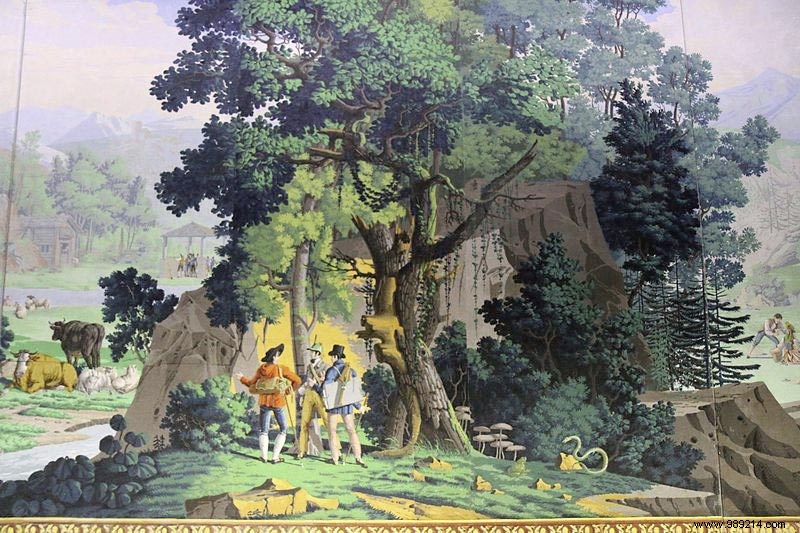
Modern printed wallpaper emerged in the 18th century, evolving from artisanal to industrial production.
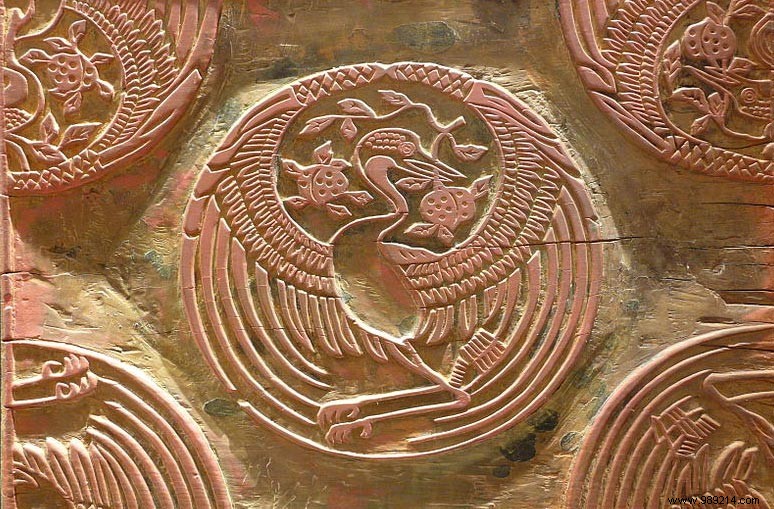
Supports vary: paper, vinyl, velvet, straw, and more.
Techniques advanced with effects like embossing, gilding, and foaming.
Wallpaper boomed everywhere—until tastes shifted and sales dipped.
Invented recently, non-woven fabric simplified installation—no board or soaking required. Sales rebounded as designers unleashed creativity with endless patterns, colors, and digital prints.
Today, use it for accents: a feature wall or entryway strip, with limitless customization.