There's immense satisfaction in sowing seeds and watching them sprout into vibrant plants. Yet, it's disheartening when nothing emerges. The most common reason for poor germination is sowing too deeply, particularly with minuscule seeds that mimic grains of sand. As an experienced gardener, I've refined a reliable method for sowing small seeds successfully.
Tools like the serfouette can dig furrows that are too deep unless your soil is impeccably fine and your touch precise—which isn't always realistic in my garden.
Start by raking the seedbed smooth. Lay the rake flat on the ground and apply gentle foot pressure to the handle. This forms a shallow, straight channel with key advantages: a uniform line simplifies sowing, and the bottom soil compacts slightly to eliminate air pockets around the seeds.
Sow your seeds into the furrow, then cover with fine potting soil. This envelops the seeds perfectly, and the dark color absorbs heat to speed germination while marking the row clearly.
Always complete the covering step: After potting soil, lightly tamp with the rake tines. Finish with a gentle watering using a fine rose nozzle, then wait—a few days for radishes, a few weeks for parsley.
See it all in photos.
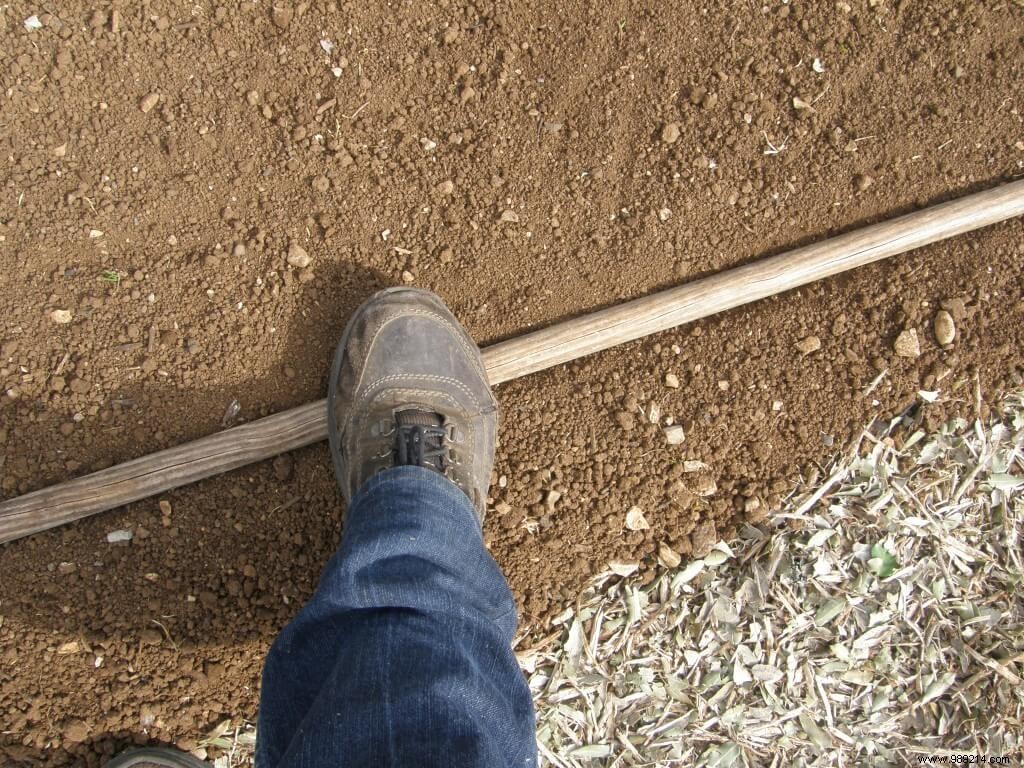
rake handle on the ground with light foot pressure
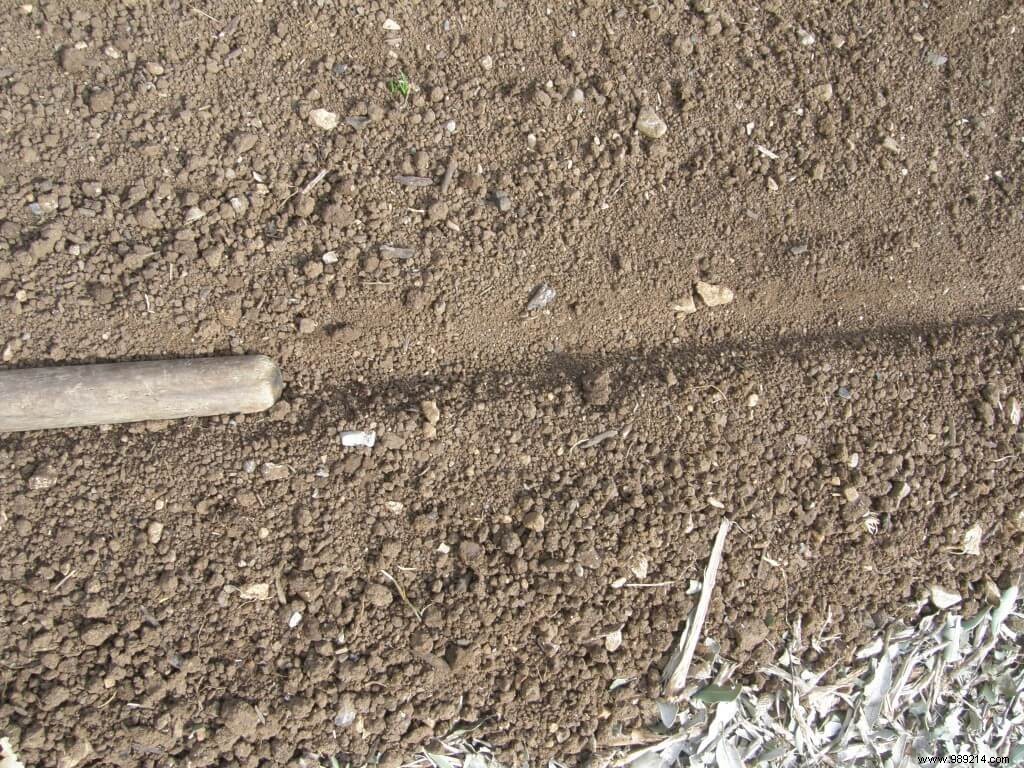
Furrow created by rake handle
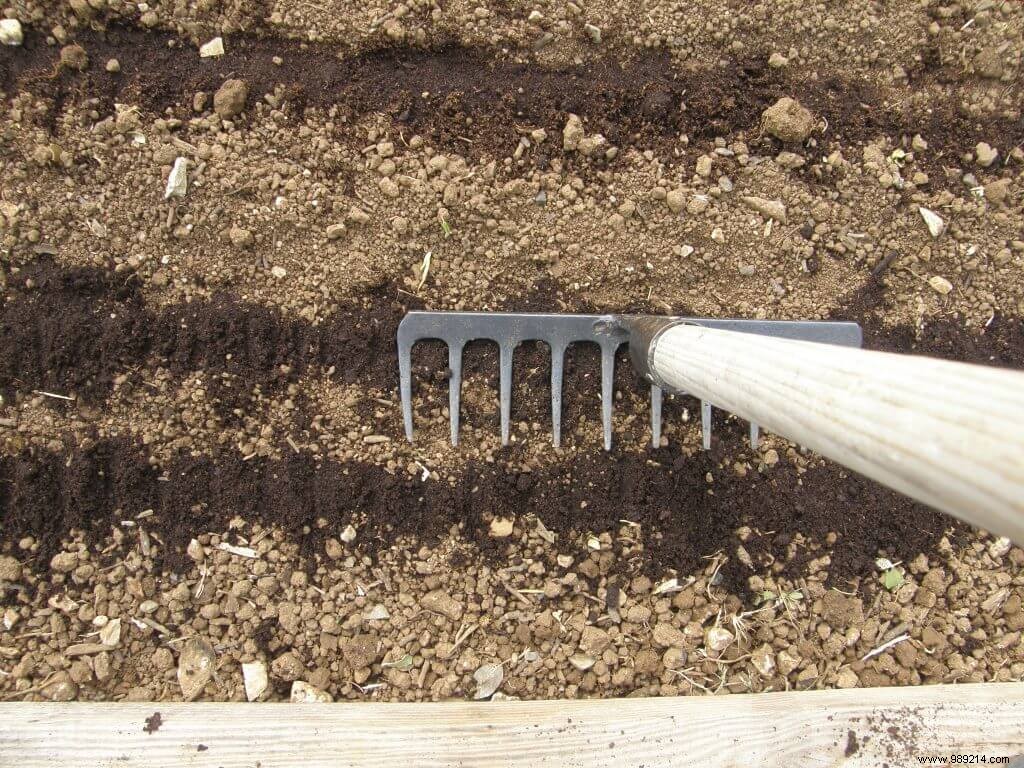
Covering the seeds
