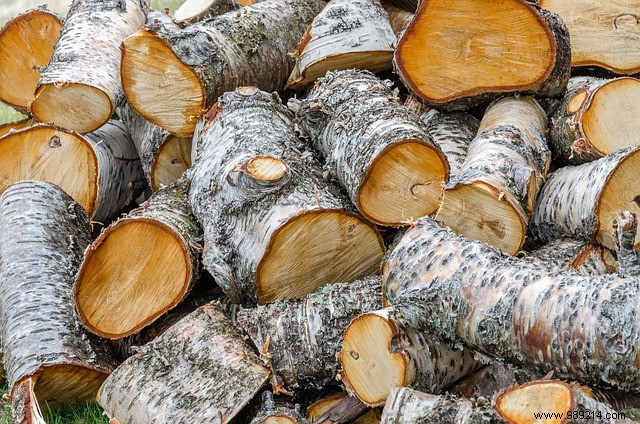
Familiar to crossword enthusiasts, the stere (st) is an ancient unit measuring firewood volume, derived from the Greek "stereos," meaning solid. Though officially replaced by the cubic meter in 1978, it remains common in the timber trade for industrial, carpentry, and especially heating purposes.
Theoretically, 1 stere equals 1 cubic meter—a 1m x 1m x 1m frame. In practice, stacked logs occupy less space due to gaps between cylindrical pieces, unlike flat planks that fill the volume completely. This discrepancy matters on a large scale.
To bridge apparent and actual volumes, France's ADEME (via NF certification for firewood) recommends cutting logs to standardized lengths between 20 cm and 1 meter. Shorter cuts allow tighter stacking, yielding precise real-volume estimates.
For instance, 1 stere of 20 cm logs equals 0.57 cubic meters of solid wood; 33 cm logs yield 0.70 cubic meters. A simple rule: 1 stere of 1-meter logs equals 1 cubic meter solid.
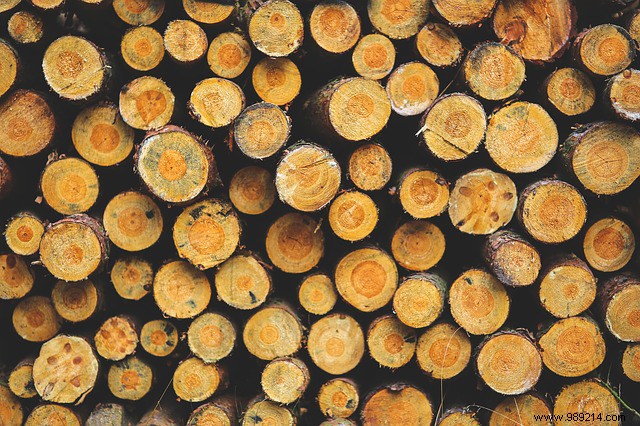
For transparency, NF standards require clear labeling of the apparent-to-real volume ratio, which varies by log length, helping buyers and sellers alike.
Before buying, verify humidity. H1 class (under 20%) is ready to burn. H2 (over 20%) may need drying; above 35%, store it first for optimal heat output in fireplaces or stoves.
