Contrary to popular belief, mixing concrete is straightforward when you follow proven dosages and a reliable process. As seasoned builders know, getting it right ensures durable results for your projects.
Concrete is the go-to binder for masonry work, blending water, cement, sand, and gravel. It's ideal for terraces, house slabs, or pool bases. Note: Don't confuse it with mortar, which skips the gravel.
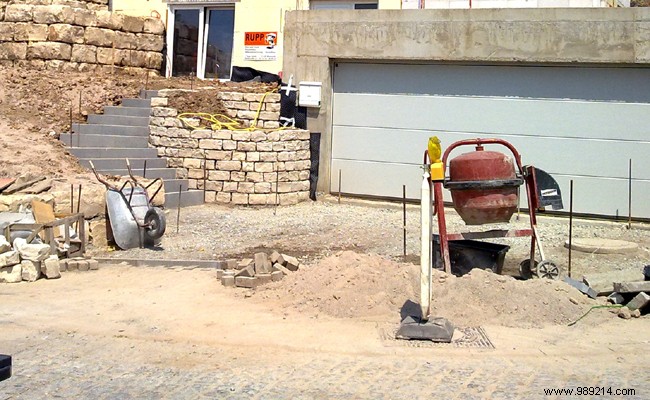
For small jobs, mix your own concrete using a mixer, shovel, mason's bucket, and wheelbarrow. Always wear gloves for safety. Key ingredients: water, cement bags, sand, and gravel.
Concrete strength hinges on precise ratios. For foundations: 1 volume cement, 2.5 sand, 3.5 gravel, 0.5 water (1–2.5–3.5–0.5). For general use: 1–2–3–0.5 (cement:sand:gravel:water).
To avoid shortages, calculate volume first. For slabs, terraces, or garages, assume 15 cm thickness. Multiply length × width × height (0.15 m) for cubic meters. Use 350 kg cement per m³; 400 kg for reinforced structures, 250 kg for plain concrete.
With materials ready, start the mixer: Add gravel, half the sand, half the water, and mix. Then incorporate cement, remaining sand, and water gradually. In seconds, it's ready—transfer to wheelbarrow or bucket and use immediately.
Key rule: Use concrete right away and clean the mixer promptly with a strong hose spray. Aim for a consistency that's not too watery or stiff. Electric mixers start at 300€; manual at 150€. Rentals run 30–50€/day for mini electrics.
