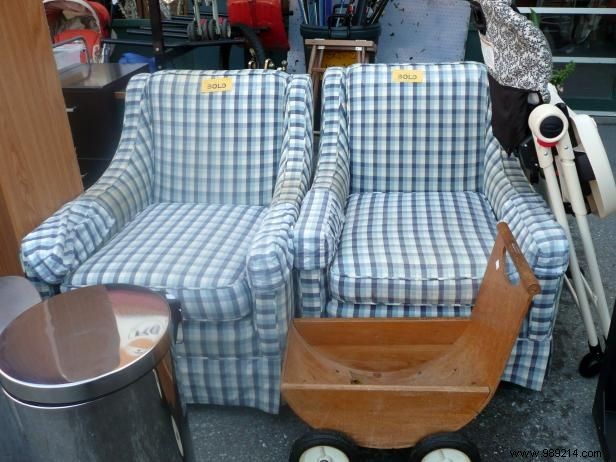
These chairs were discovered at a garage sale by Joanne Palmisano, author of Salvage Secrets (W.W. Norton, September 2011). She runs the blog Salvage Secrets. Look for sturdy chairs with good bones that just need a fresh update.
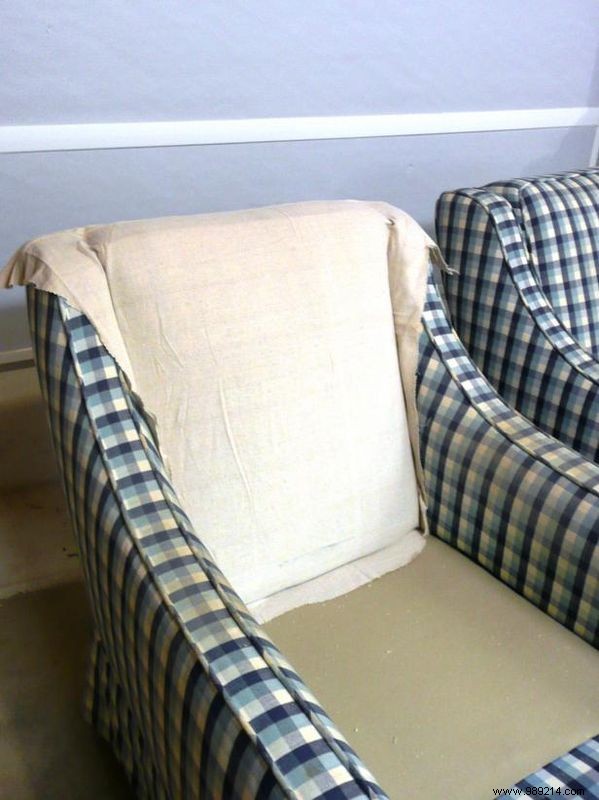
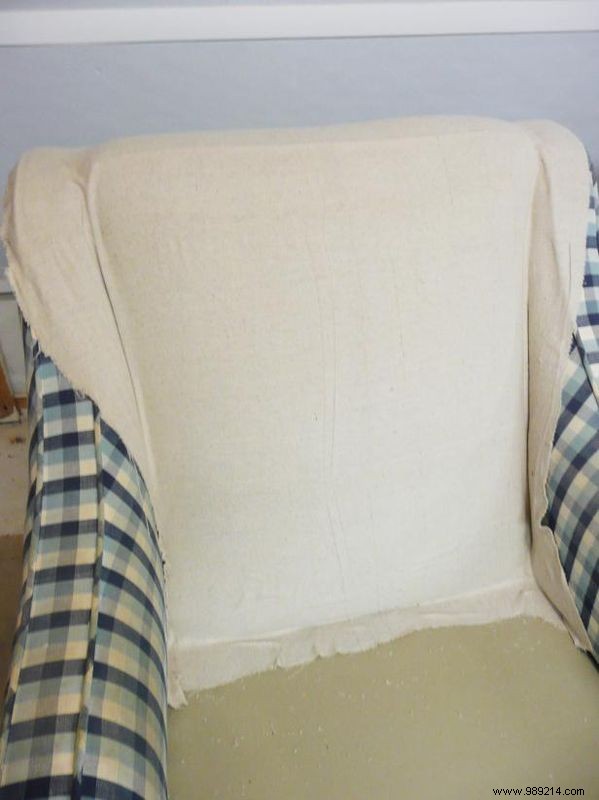
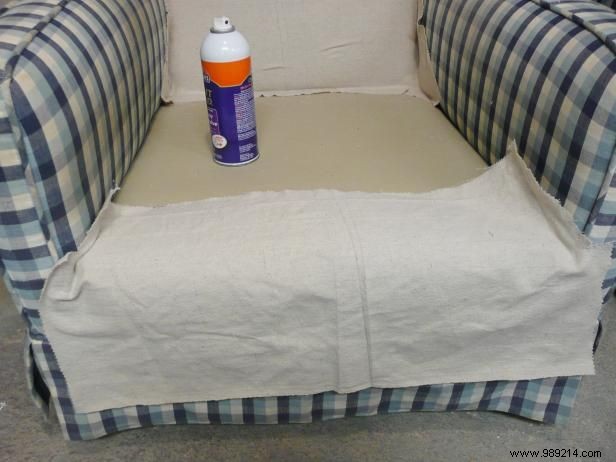
Cut drop cloth into large pieces to cover major chair sections. Tuck and fold at seams for a polished finish. In some spots, glue the fabric directly; elsewhere, hand-sew for security.
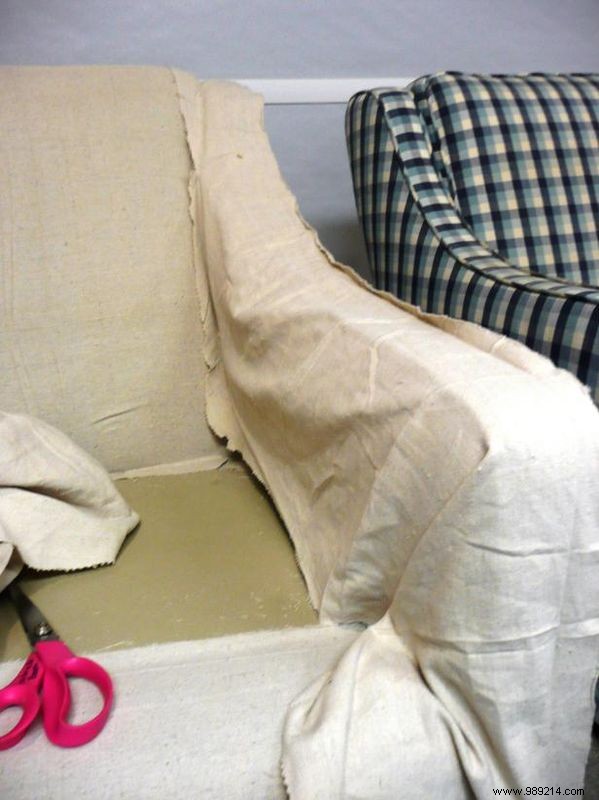
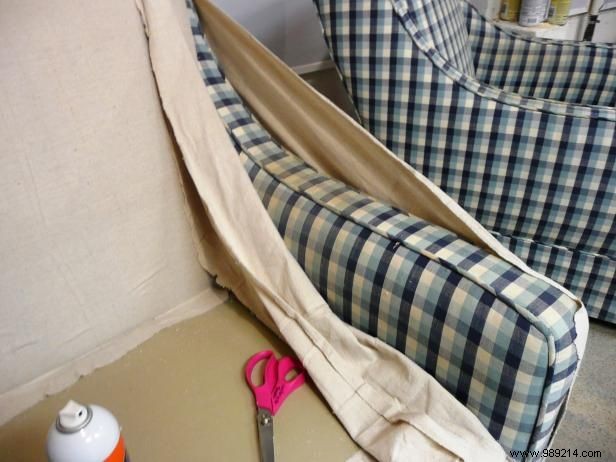
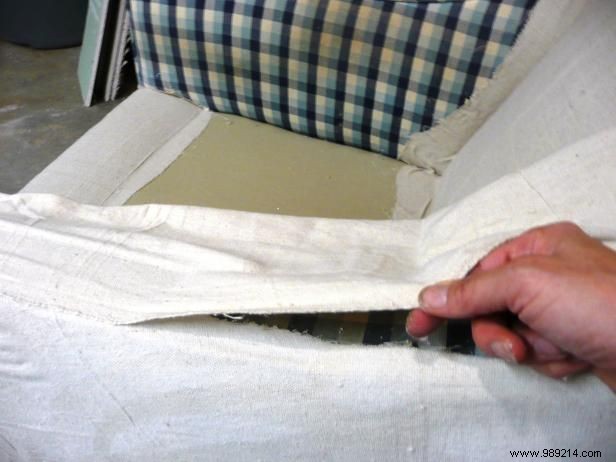
Use the drop cloth's finished canvas edges on visible areas like arms and back. Arms consist of two pieces: the inner folds over the outer.
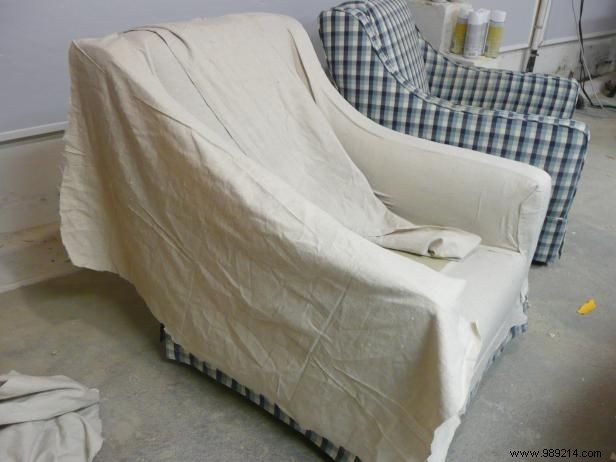
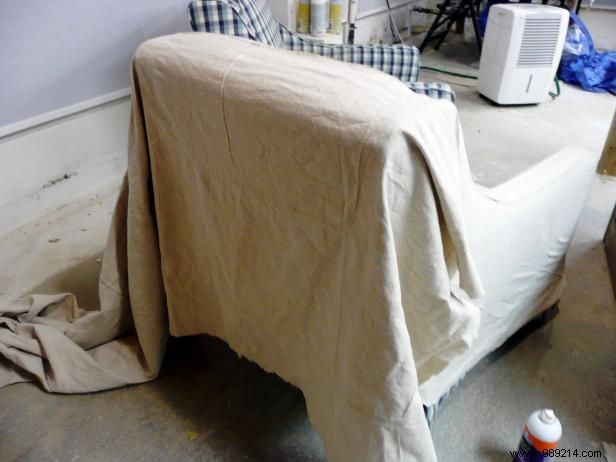
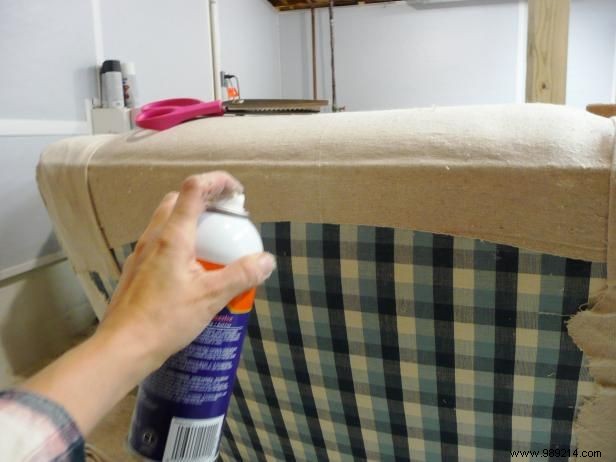
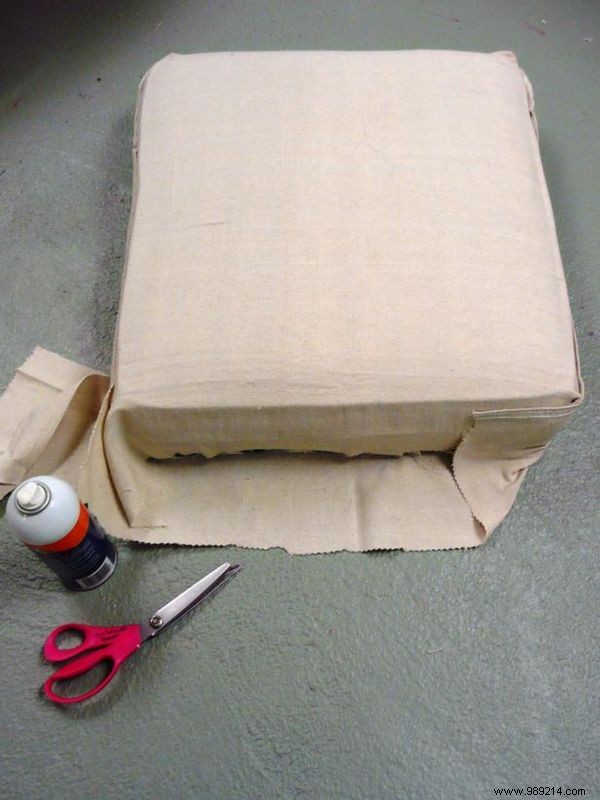
Trim pieces to size, leaving extra for curves. Apply spray adhesive gradually, pressing to smooth wrinkles. It's repositionable if needed.
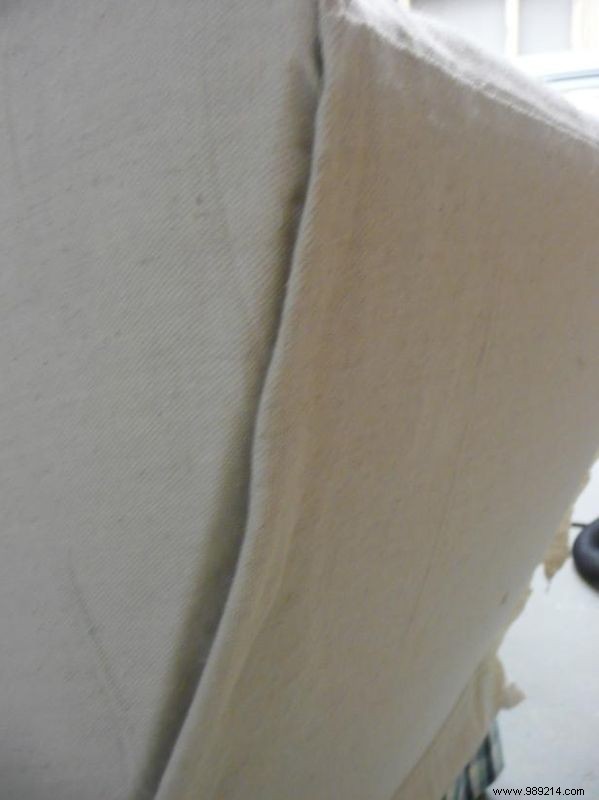
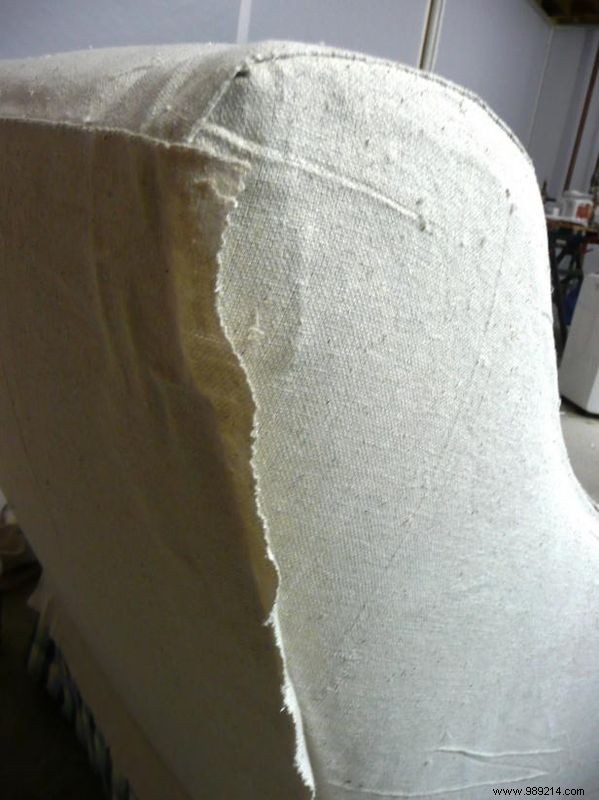
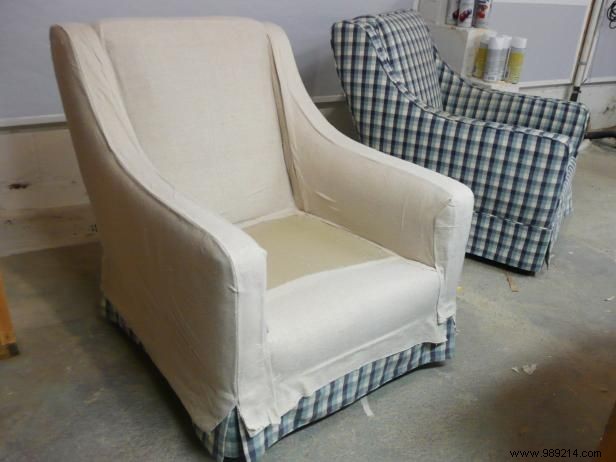
Cut one piece at a time, folding or inserting edges for a clean seam.
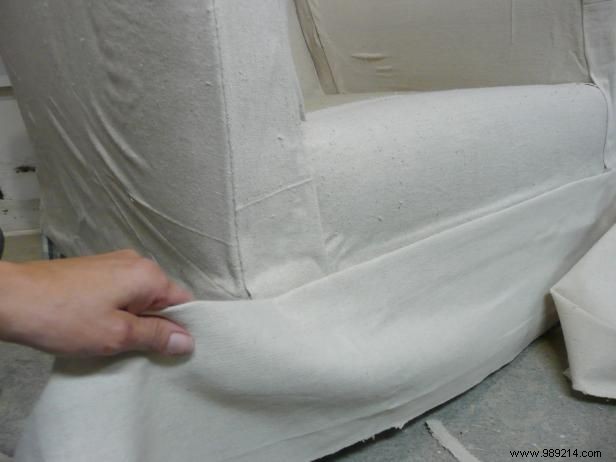
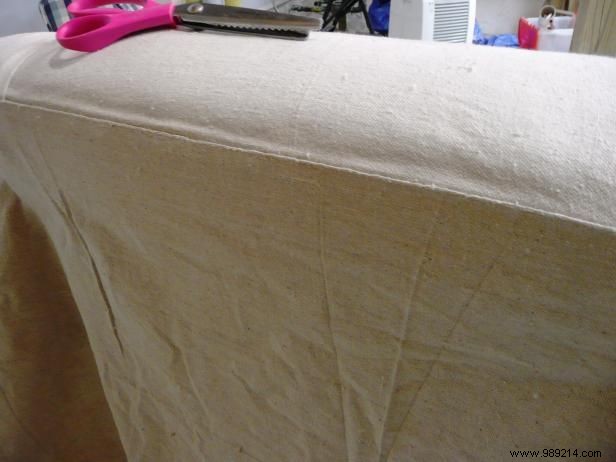
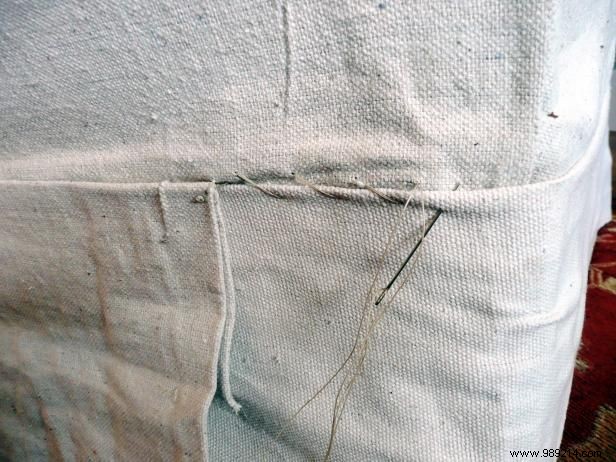
Craft a skirt to cover bottom edges. Use one long piece wrapped around or separate panels per side.
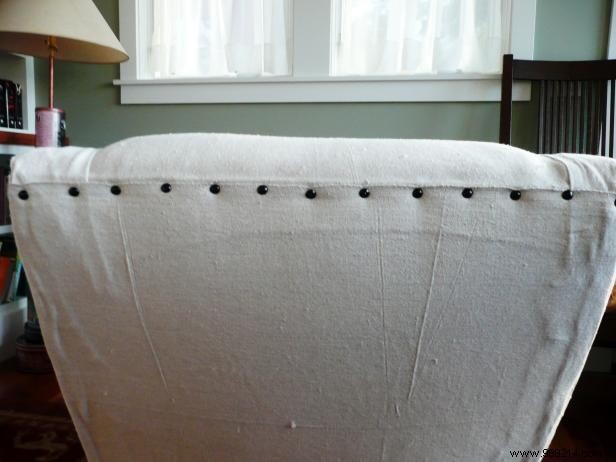
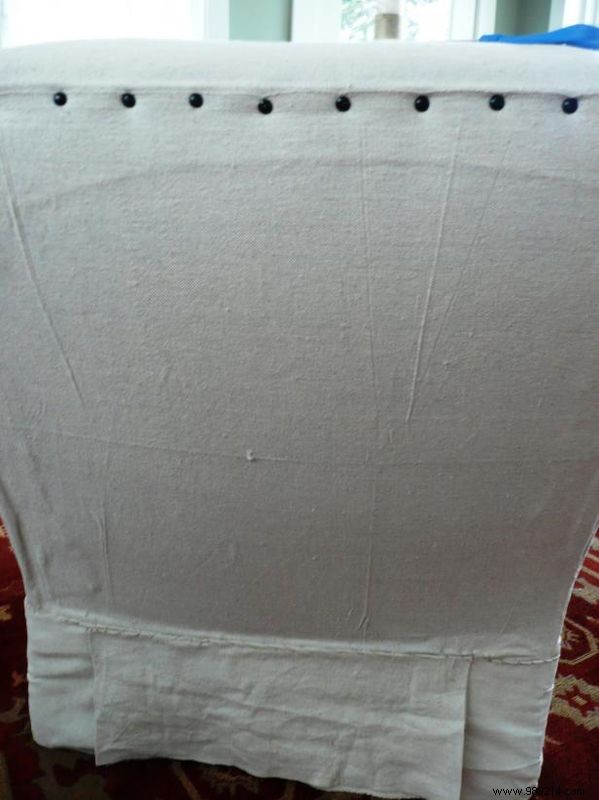
Once positioned and glued, hammer upholstery nailheads through fabric into the frame.
Chairs differ: feel for the frame in arms, back, or edges to place nails accurately.
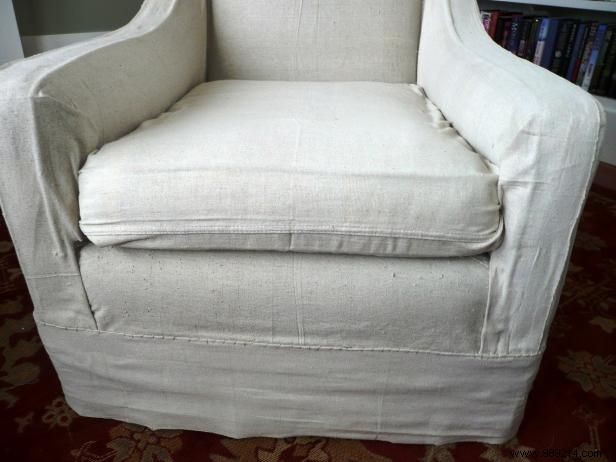
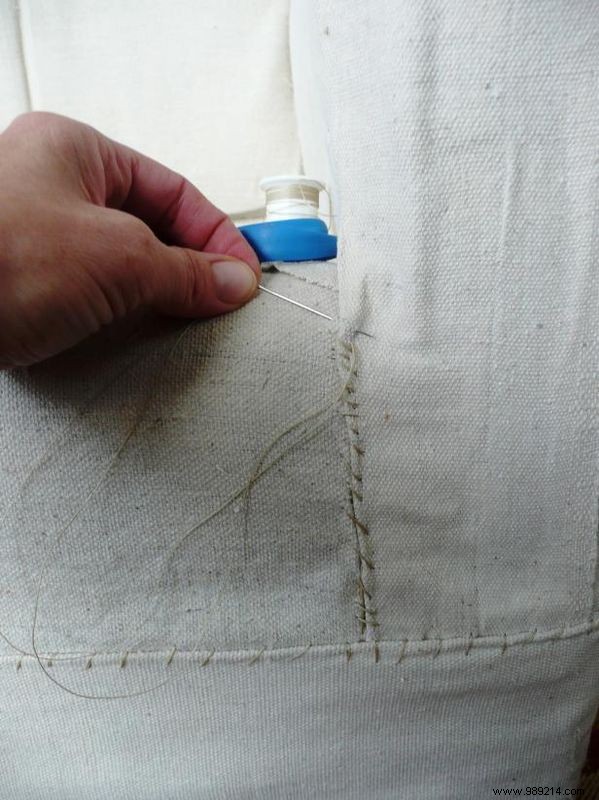
Sew most seams to secure fabric permanently. Adhesive holds temporarily; stitching delivers a durable, rustic-chic style.
