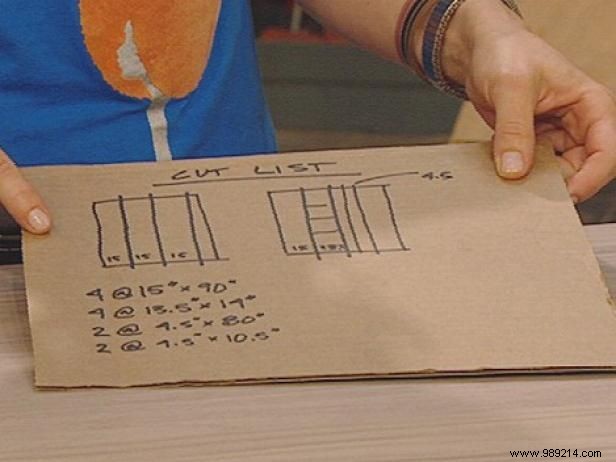
Measure your space and sketch a rough layout to estimate lumber needs. Use this plan to generate an efficient cut list that maximizes material usage.
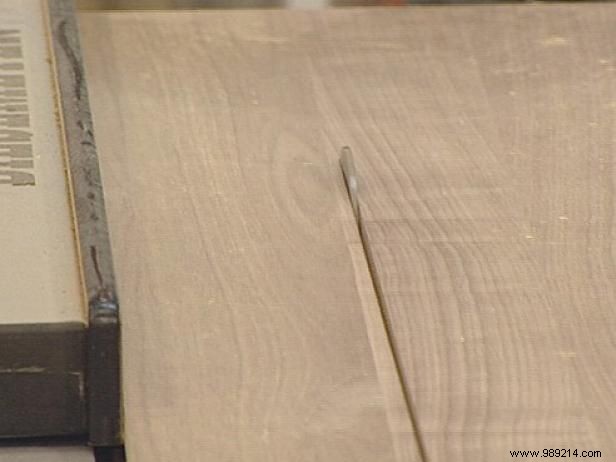
As seasoned woodworkers, set your table saw blade and rip fence to the shelf width. Table saws cut downward, so face the best side up. Keep boards flat on the table and square to the fence for clean rips.
Reset the blade to rip vertical shelf supports to width.
Rip pieces for the plinth base too. This sturdy platform elevates the unit for better height and delivers a wide, stable stance for reinforcement.
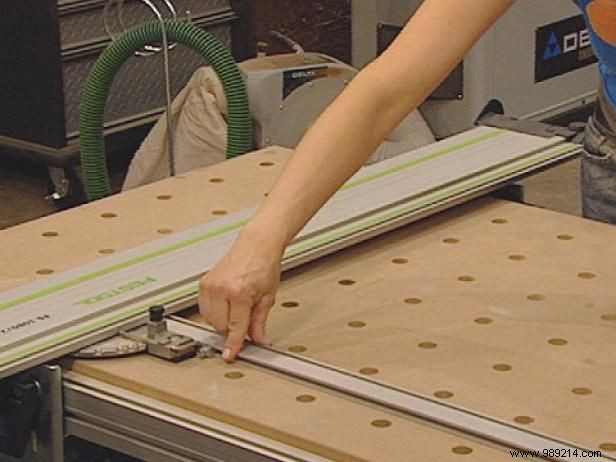
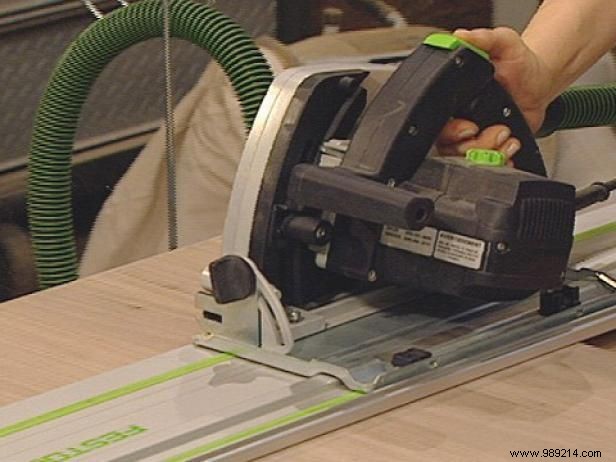
With widths complete, cut pieces to final lengths. We use a European-style track saw—a plunge-cut circular saw on a guided rail for precise ripping and crosscuts (Image 1).
Without a track saw, make crosscuts with a miter or chop saw, or clamp a straightedge to guide your circular saw (Image 2). Circular saws cut upward, so position the best face down.
Repeat for all shelves, then cut dividers and toe kick sections to length.
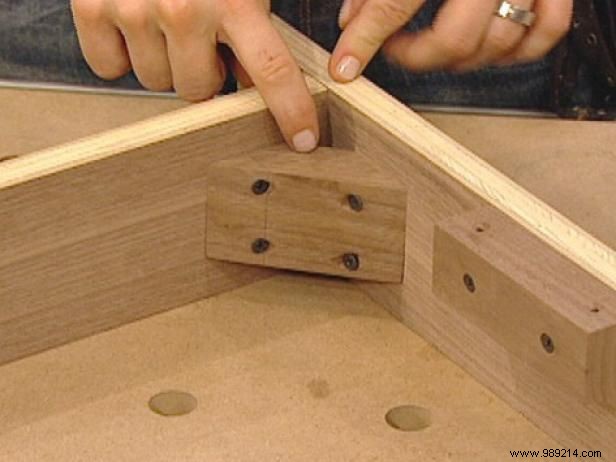
Clamp and glue baseboard sections with butt joints.
From 3/4-inch scrap plywood, cut 1x4 corner braces with 45-degree ends. Cut 1x2 mounting blocks from scrap.
Measure 3/4 inch down from the inside top edge of the baseboard. Secure corner braces and mounting blocks at 12-inch intervals with 1-inch wood screws. These anchor the bottom shelf securely.
